Cheap Data in South Korea — SIM Cards, eSIMs, and Pocket WiFi Compared
Airport SIM cards, eSIMs, and pocket WiFi rentals compared for South Korea travel. Real 2025 prices and per-day cost by trip length.
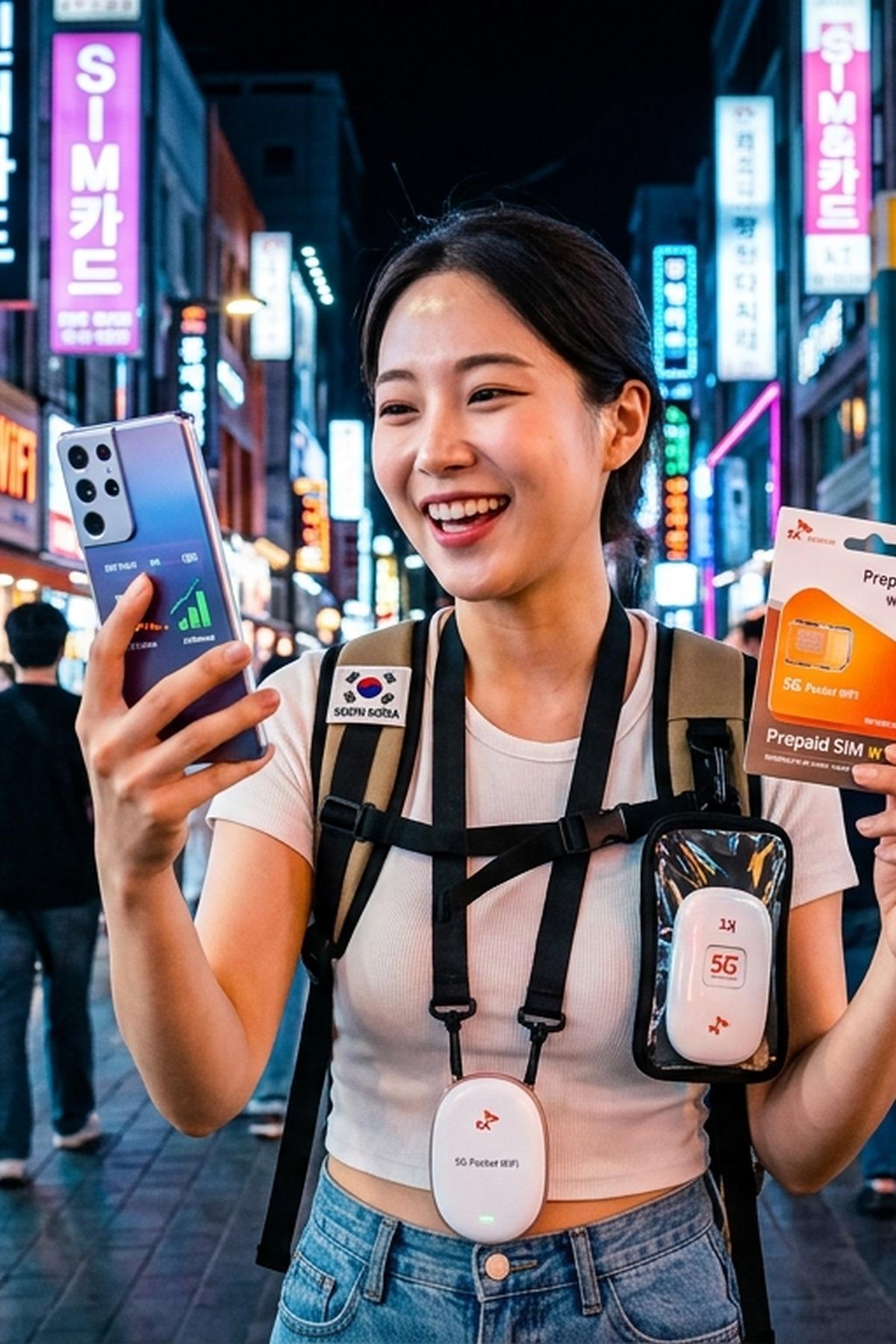
Stepping off a long flight at Incheon and scrambling to get online is exactly the kind of stress that sets the wrong tone for a trip. South Korea has some of the fastest mobile infrastructure on the planet, and international travelers have three real options for accessing it: buying a physical SIM at the airport, activating an eSIM before departure, or renting a pocket WiFi unit. Each one wins in specific situations. The difference between picking the right one and the wrong one can easily be $20 to $40 over a ten-day trip, which is two solid restaurant meals in Seoul.
eSIMs are the cheapest option for most travelers, but coverage and plan structure vary more than the price alone suggests.
- Airport SIM cards cost roughly $1.50 to $2.60 per day and connect immediately, but you pay a convenience premium for buying at the counter.
- eSIMs can fall below $1 per day on longer trips, with no physical card to lose, yet rural coverage gaps make provider research non-negotiable.
- Pocket WiFi makes financial sense mainly for groups splitting the rental fee; solo travelers almost always pay more per day and carry an extra device for the privilege.
South Korea's Mobile Networks: Why the Starting Point Is Already High
South Korea's three main carriers, SK Telecom, KT Corporation, and LG U+, collectively cover almost the entire peninsula. Subway tunnels, highway rest stops, mountain hiking trails, and coastal ferry terminals all tend to have usable signal. Travelers benefit from this because every reseller, eSIM provider, and WiFi rental service runs on top of these same networks. You are not gambling on infrastructure quality. What changes across options is the price you pay to access it, and in some cases, which specific carrier your reseller partners with.
South Korea's fixed and mobile network infrastructure consistently places among the highest-ranked globally for both coverage density and average download speeds, with nationwide 5G rollout already advanced well beyond what most countries have achieved. That depth of infrastructure is exactly why tourist-facing data options are this affordable.
Airport SIM Cards: The No-Planning Option
Every major arrival corridor at Incheon International Airport has staffed SIM card counters. The process takes about five minutes: show your passport, choose a plan, insert the SIM, and your phone is online before you reach the baggage carousel. For travelers who did not arrange anything in advance, this is the fastest path to connectivity.
Typical 2025 pricing at airport counters:
- 7-day plans: 15,000 to 25,000 KRW (about $11 to $18 USD), working out to roughly $1.60 to $2.60 per day
- 10-day plans: 20,000 to 33,000 KRW (about $15 to $24 USD), landing around $1.50 to $2.40 per day
- 30-day plans: 35,000 to 55,000 KRW (about $26 to $40 USD), dropping to under $1.35 per day at the cheaper end
The catch on most airport SIM "unlimited" plans is the daily fair-use threshold. You get full speeds for the first 1.5 to 2GB per day, then the connection throttles to 400 kbps or slower. For maps, messaging, and basic browsing, that is acceptable. For streaming or heavy uploads, it gets painful after the first hour or two of hard use.
You also need an unlocked phone with a physical nano-SIM slot. Carrier-locked phones will not work, and dual-eSIM-only phones (a growing category in newer flagship models) cannot accept the card at all. Check your device before assuming this option is available to you.
Getting an eSIM: The Cheapest Path if You Plan Ahead
An eSIM is a digital SIM profile you download and activate before leaving home. When your flight lands in Korea, your phone connects to the network automatically. No queue, no counter, no passport required at the airport. For budget travelers willing to spend fifteen minutes arranging things in advance, this is usually where the best value lives.
eSIM prices for Korea in 2025 vary more than physical SIM prices do because the provider market is more fragmented. Rough benchmarks across reputable providers:
- 1GB per day for 7 days: roughly $6 to $10 total, or about $0.85 to $1.40 per day
- 10GB pooled for 30 days: roughly $10 to $16 total, or under $0.55 per day
- Unlimited throttled for 15 days: roughly $12 to $20 total, or $0.80 to $1.33 per day
The longer your trip, the more pronounced the per-day savings. A 30-day pooled eSIM plan can genuinely cost less per day than a convenience store can of Sprite.
Coverage is where eSIMs require extra attention. Providers license network access from Korean carriers, but not all of them have agreements extending to every region. Travelers heading to Jeju ferry ports, Gyeongju's countryside temple routes, or rural bus lines in the southwest need to confirm their plan's actual reach before buying. Checking Korea eSIM coverage for your specific itinerary takes two minutes and can prevent a frustrating dead zone at a ferry terminal or a mountain trailhead. A plan that performs flawlessly in Hongdae may drop signal on a country road two hours from any major city.
One hardware note: eSIMs require a compatible device. Most flagship phones released after 2018 support them, but many mid-range and budget Android phones still do not. Verify your phone model before assuming this option works for you.
Pocket WiFi Rentals: When Sharing Makes the Numbers Work
Pocket WiFi units (called "egg WiFi" in Korean, after the original egg-shaped design) are portable routers you rent and return. Multiple devices connect to one unit simultaneously, which is the main appeal for couples, small families, or tight travel groups.
Rental rates at Incheon airport counters and pre-booking services typically run 3,500 to 6,000 KRW per day (about $2.50 to $4.40 USD). You pay a refundable deposit of around 50,000 to 100,000 KRW upfront and return the unit on departure, either at the airport counter or via a courier drop box for early morning flights.
For two people splitting daily costs, pocket WiFi can match or slightly beat airport SIM pricing. For a solo traveler, it is almost always more expensive and adds the inconvenience of carrying and charging a second device. Battery life on these units is typically five to ten hours of active use, which means mid-afternoon charging stops on long days out.
Data throttling rules on pocket WiFi mirror what you find on SIM cards: full speed for a daily volume allowance, usually 1 to 2GB, then a stepped-down connection for the rest of the day.
Coverage Outside Seoul: The Deciding Factor for Rural Itineraries
This is the detail that matters most for travelers doing more than a Seoul-Busan straight shot, and it often gets buried in general data comparisons.
In Korean cities, all three major carriers provide strong, consistent coverage. The differences surface on ferry crossings between islands, in mountain valleys, and on rural roads connecting smaller towns. Travelers planning time in Gyeongju's countryside, the outer edges of Jeju, or the agricultural districts of Jeonnam province should treat coverage as a primary buying criterion rather than a footnote.
Pocket WiFi units rented at Incheon typically run on KT or SK Telecom networks, both of which have solid rural footprints. Airport SIM cards are generally the same. eSIM providers vary more widely, since some lease only urban-dense network tiers or rely on a single carrier that may not be the strongest outside city centers. If rural connectivity matters for your trip, confirm the underlying carrier and verify the regional coverage map before committing to a plan.
Per-Day Data Cost Estimates by Trip Length
Short Trips of Three to Five Days
An airport SIM card is hard to beat here on raw convenience. The per-day cost at this trip length is typically $1.60 to $2.60, setup is immediate, and there is no pre-planning required. An eSIM can match or slightly undercut that price if you activate it before departure, but the total savings on a five-day trip are modest, usually $5 to $8 at most.
Mid-Length Trips of Seven to Ten Days
eSIMs start pulling ahead on cost at this duration. A 10-day eSIM plan with sufficient data typically runs $8 to $15 total, translating to $0.80 to $1.50 per day. An airport SIM for the same period costs $15 to $25. That gap is real money, and the setup is not complicated once you have done it once.
Longer Stays of 14 or More Days
eSIMs dominate at this trip length. Pooled 30-day plans with 10 to 20GB of data can cost less than $20 total, pushing the daily rate below $0.70. Pocket WiFi at $3 to $4 per day becomes hard to justify for a solo traveler. Airport SIM 30-day plans exist but rarely undercut a well-chosen eSIM on price, and the per-day savings compound significantly at this duration.
All Three Options Compared Side by Side
Costs, Setup, and Best-Fit Scenarios
| Option | Est. Per-Day Cost (USD) | Setup Requirement | Best Fit |
|---|---|---|---|
| Airport SIM Card | $1.50 to $2.60 | 5 min at airport counter; unlocked phone required | Short trips, travelers who prefer physical SIMs |
| eSIM | $0.50 to $1.40 | Activate before departure; check coverage map for rural areas | Mid to long trips; solo travelers focused on cost |
| Pocket WiFi | $1.25 to $2.20 split two ways | Pick up and return at airport; carry and charge daily | Groups of two or more sharing costs |
Folding Data Costs Into Your Korea Budget: the Number That Actually Matters
Mobile data is rarely the biggest number in a Korea trip budget, but it is one of the easiest to optimize with minimal effort. Switching from a default airport SIM purchase to a pre-activated eSIM on a 10-day trip can save $10 to $15 with no compromise in connectivity quality. On a tight budget, that is a full tray of Korean fried chicken, a pair of subway top-ups, or a night at a decent guesthouse in Jeonju.
The clearest advice for most travelers: if you are going solo for more than five days and your phone supports eSIMs, start there. Buy the plan at least a day before your flight, confirm the coverage map for any rural areas on your itinerary, and activate it the night before you leave. Your per-day cost will land between $0.50 and $1.40, your phone connects the moment you land, and you skip the airport counter queue entirely. South Korea's networks are genuinely excellent across the board. The only job left is making sure you are accessing them at the right price.