The Real Cost of Traveling South Korea on a Shoestring
A realistic breakdown of what a budget trip to South Korea costs, from Seoul street food to intercity transport, so you can plan without nasty surprises.
- Flag
-
- ISO code
- KR
- Population
- 51,635,256
- Currency
- KRW
- Dial code
- +82
The Real Cost of Traveling South Korea on a Shoestring
You can get through a full day in South Korea for ₩60,000 to ₩90,000, about $46 to $69. That covers a hostel dorm bed, three meals built from street food and convenience stores, unlimited subway rides, and one entry fee. The fear that Korea is too expensive comes from people who eat Korean BBQ every night and sleep in hotels. If you sleep cheap and eat like a local, your biggest problem won't be the price. It will be where to put all the empty tteokbokki cups.
The single thing that breaks a backpacker budget in Korea is accommodation, not food or transport. A dorm bed in Seoul costs ₩15,000 to ₩30,000 per night. That is half your daily budget right there. In smaller cities like Gyeongju or Jeonju, the same bed drops to ₩12,000 to ₩20,000. The rest of your costs scale down in proportion: street food stays cheap, transit stays cheap, entry to temples and palaces costs almost nothing. Accommodation is the variable that determines whether you travel on ₩60,000 a day or ₩150,000.


- Budget Daily Total (Hostel Dorm, Street Food, Subway): ₩60,000, ₩90,000
- Mid-Range Daily Total (3-Star Hotel, Restaurants, Taxis): ₩150,000, ₩250,000
- Comfort Daily Total (5-Star Hotel, Fine Dining, Private Driver): ₩400,000+
- Subway Base Fare (T-Money Card, Seoul Metro): ₩1,400
- Street Food Single Item (Tteokbokki, Eomuk, Hotteok): ₩1,500, ₩5,000
- Guesthouse Dorm Bed (Seoul, Per Night): ₩15,000, ₩30,000
- Cheapest Expense Category vs Regional Average: Transport
- Exchange Rate (August 2026, Approximate): ₩1,300 = US$1
- Tipping Culture: No tipping expected or practiced
- K-ETA Fee (2026): ₩10,000
Where Your Money Actually Goes
The Arithmetic of a Cheap Day
Take a clean day in the middle of the budget range. Accommodation takes 27% to 40%, depending on whether you pay ₩20,000 for a jjimjilbang floor or ₩30,000 for an eight-bed dorm. Food and drink take 25% to 35%. You eat four or five small meals from street stalls and convenience stores: a triangle kimbap for ₩1,500, a cup of ramyeon for ₩1,800, a stick of eomuk for ₩2,000, and a hotteok for ₩2,500. That leaves you about ₩20,000 for transit, entry fees, and one café americano. The math works. The system is designed for you to live cheaply, as long as you don't sit down in a restaurant three times a day.
Seoul vs Busan: The Transit Gap
Compare Seoul to Busan. A dorm bed in Busan costs ₩12,000 to ₩22,000. A meal at the Jagalchi Market raw fish section runs ₩10,000 to ₩15,000, still cheap. But you save on transit: Busan's subway is smaller, and most budget hostels sit within walking distance of the main beach or market. In Seoul, you will swipe your T-money card six to ten times a day just moving between districts. Those ₩1,400 fares add up. Over a week, Seoul transit costs an extra ₩10,000 to ₩15,000 compared to a mid-sized city.
Transport is the cheapest spending category in Korea compared to the regional average. A subway ride at ₩1,400 covers 10 km. An intercity bus from Seoul to Busan at ₩25,000 to ₩40,000 covers 420 km. That is about ₩0.06 per km. No other developed country comes close. The KTX high-speed train from Seoul to Busan costs ₩59,800 economy, about $46 for a 2 hour 15 minute ride. That is not a budget expense for a daily spend, but for a single long-distance move, it is a steal.
The Four Ways to Sleep on the Cheap
Jjimjilbang: The Floor That Warms Your Back
You have four real options for accommodation under ₩30,000 a night. Each one changes your day. Option one: the jjimjilbang, a Korean bathhouse where you pay ₩12,000 to ₩20,000 for entry and sleep on a heated floor in a common area. You get a locker, a sauna, and a floor that warms your back. You do not get privacy or earplugs. Skip this if you need eight hours of silence. Use it for one or two nights when you arrive late or leave early.
Goshiwon: A Private Box for Students
Option two: the goshiwon, a tiny private room originally built for students cramming for exams. On a monthly rate, ₩300,000 to ₩550,000 works out to ₩10,000 to ₩18,000 per night. You get a desk, a bed, a minifridge, and a shared bathroom. The room is roughly the size of two king mattresses. This is the cheapest private space in Korea. Book one for a week or more. The catch is the smell: goshiwons are small, windowless, and you share the cooking area with stressed students.
Guesthouse Dorms and When to Splurge
Option three: the guesthouse dorm bed at ₩15,000 to ₩30,000 in Seoul, cheaper in smaller cities. This is your standard hostel experience. Option four: the budget motel, ₩50,000 to ₩80,000, which blows your daily allowance. Use it only for one night after a long KTX ride when you need a shower and a door that locks.
| Spending Category | Low Day (₩60,000) | High Day (₩90,000) | Percentage of High Day |
|---|---|---|---|
| Accommodation | ₩15,000 (jjimjilbang) | ₩30,000 (guesthouse dorm) | 33% |
| Food and Drink | ₩15,000 (street food + convenience store) | ₩25,000 (street food + one restaurant meal) | 28% |
| Transit (T-Money) | ₩5,600 (4 subway rides) | ₩8,400 (6 subway rides + bus) | 9% |
| Attractions and Entry | ₩0 (free palaces on Culture Day) | ₩5,000 (one palace + museum) | 6% |
| Café and Snacks | ₩4,500 (one americano) | ₩6,000 (one americano + convenience store snack) | 7% |
| Miscellaneous | ₩19,900 (savings or buffer) | ₩15,600 (souvenirs, coin laundry) | 17% |


The Free Stuff is Actually Good
Museums, Palaces and the Culture Day Trick
Korea does free attractions better than most countries. The permanent exhibitions at the National Museum of Korea and the War Memorial of Korea cost exactly nothing. Both are major museums with English labels. Bukchon Hanok Village, Cheonggyecheon Stream, the Hangang Parks, and Seoul Forest are all free to walk through. You can spend an entire day in Seoul without paying an entry fee. Plan your itinerary around the last Wednesday of the month, Culture Day, when Gyeongbokgung Palace, Changdeokgung Palace, Deoksugung Palace, and Jongmyo Shrine open for free. Normal entry to Gyeongbokgung is ₩3,000. Not expensive, but free is better. If you are in Korea for two weeks, you can hit two Culture Days. That saves about ₩12,000 in palace fees.
The DMZ and What to Skip
One thing you must pay for: any DMZ tour. There is no free way to access the observatory. Tours start at about ₩55,000 from Seoul and go up. Budget for it separately if you want to go. Skip it if your daily budget is under ₩70,000 and you are staying less than a week. The money is better spent on a KTX ticket south.
When to Come and What to Avoid
The cheapest months for flights and accommodation are January, February (excluding Lunar New Year), and November (excluding Chuseok). Cherry blossom season in late March to early April and autumn foliage in mid-October to early November drive prices up. Book your dorm bed two weeks ahead during those windows. The peak domestic travel periods are Lunar New Year (Seollal) in January or February and Chuseok in September or October. Both run three days. Hostels fill up. Intercity buses sell out. Plan around them, not through them.
Regions & cities in South Korea
-
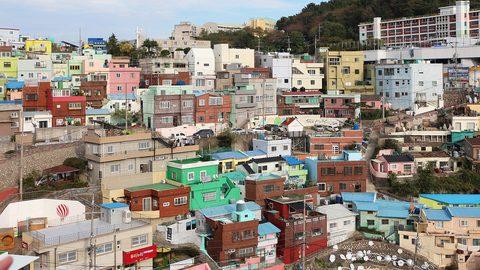 Busan
Take the night train from Seoul, wake up on Haeundae Beach, and do Busan on a budget. The cheap seafood markets, free viewpoints, and how to book that train.
Busan
Take the night train from Seoul, wake up on Haeundae Beach, and do Busan on a budget. The cheap seafood markets, free viewpoints, and how to book that train.
-
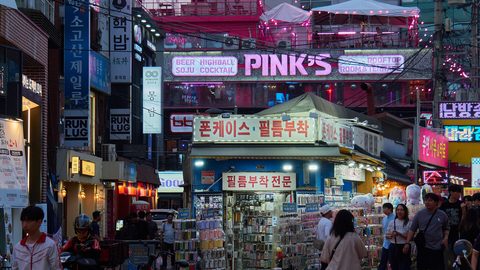 Seoul
Seoul does not have to be expensive. A district-by-district guide to free attractions, cheap street eats near subway exits, and the palace days that cost nothing.
Seoul
Seoul does not have to be expensive. A district-by-district guide to free attractions, cheap street eats near subway exits, and the palace days that cost nothing.
More on South Korea
-
 Korea or Japan for a Cheap Trip The Honest Arithmetic Breakdown
A direct cost comparison of street food, transit passes, and budget beds to decide whether South Korea or Japan is cheaper for your next trip.
Korea or Japan for a Cheap Trip The Honest Arithmetic Breakdown
A direct cost comparison of street food, transit passes, and budget beds to decide whether South Korea or Japan is cheaper for your next trip.
-
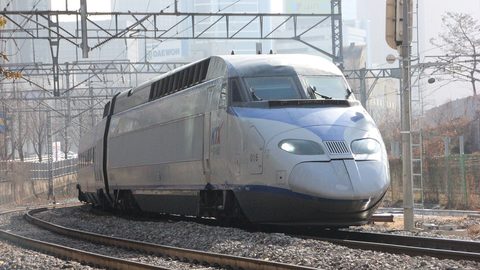 KTX or Intercity Bus When the Korean Train Is Worth Double the Price
-
 Praying in South Korea Seoul Mosques Musallas and What Muslim Travelers Should Expect
A practical guide to mosques, musallas, and prayer rooms in Seoul and beyond, including the Itaewon Central Mosque, Incheon Airport facilities, and what to expect for Jummah.
Praying in South Korea Seoul Mosques Musallas and What Muslim Travelers Should Expect
A practical guide to mosques, musallas, and prayer rooms in Seoul and beyond, including the Itaewon Central Mosque, Incheon Airport facilities, and what to expect for Jummah.
-
 Getting By in Seoul Without Speaking Korean What Actually Works
You do not need Korean to travel Seoul, but one hour with Hangul and the right app changes everything. Here is what actually works on the ground.
Getting By in Seoul Without Speaking Korean What Actually Works
You do not need Korean to travel Seoul, but one hour with Hangul and the right app changes everything. Here is what actually works on the ground.
-
 Seoul SIM Card eSIM and Pocket WiFi Prices Compared Honestly
A straight price comparison of SIM cards, eSIMs and pocket wifi for Seoul, with the real pickup costs at Incheon Airport and which option wastes your money.
Seoul SIM Card eSIM and Pocket WiFi Prices Compared Honestly
A straight price comparison of SIM cards, eSIMs and pocket wifi for Seoul, with the real pickup costs at Incheon Airport and which option wastes your money.
-
 How to Ship a Parcel Home from Seoul Post Office Costs and Customs Forms
Sending a box home from Seoul is straightforward once you know the right form and counter. Real post office prices, weight limits, and the kimchi shipping rules explained.
How to Ship a Parcel Home from Seoul Post Office Costs and Customs Forms
Sending a box home from Seoul is straightforward once you know the right form and counter. Real post office prices, weight limits, and the kimchi shipping rules explained.
Frequently Asked Questions
What is a realistic daily budget for a backpacker in South Korea?
₩60,000 to ₩90,000 per day. That covers a dorm bed, street food and convenience store meals, and subway rides. The lower end works for jjimjilbangs and many free attractions. The higher end gives you one restaurant meal and a café drink.
How much does a dorm bed cost in Seoul versus smaller cities?
A guesthouse dorm bed in Seoul costs ₩15,000 to ₩30,000 per night. In Busan, Gyeongju, or Jeonju, that drops to ₩12,000 to ₩22,000. A jjimjilbang overnight costs ₩12,000 to ₩20,000 anywhere.
Is the T-money card worth it?
Yes. Buy one for ₩2,500 to ₩4,000 at any convenience store. It saves you ₩100 per subway ride compared to single-journey tickets. You can also use it on buses, in taxis, and at convenience stores. Minimum top-up is ₩1,000.
Can I get by without speaking Korean?
Yes, in all tourist areas. Subway signs and announcements are in English, Chinese, and Japanese. Menu boards in street stalls often have pictures. T-money card machines have an English button. You do not need Korean to order food or buy a train ticket.
Do I need a visa to enter South Korea?
If you hold a passport from Brunei, Malaysia, Singapore, or Thailand, you are eligible for K-ETA visa-free entry for 30 to 90 days. Apply at k-eta.go.kr. The 2026 fee is ₩10,000. Approval takes up to 72 hours. If you hold a passport from Cambodia, Indonesia, Laos, Myanmar, the Philippines, or Vietnam, you must apply for a visa before travel. K-ETA is not available to these nationalities.
Is street food safe to eat?
Yes. Korean street food vendors are regulated, and turnover is high. Tteokbokki, eomuk, hotteok, and odeng are cooked in front of you. Stick to stalls with a line of locals. Avoid anything that looks like it has been sitting out for hours.
What is the cheapest way to travel between Seoul and Busan?
The intercity express bus costs ₩25,000 to ₩40,000 and takes 4 hours 30 minutes to 5 hours. The KTX high-speed train costs ₩59,800 economy and takes 2 hours 15 minutes. The bus is cheaper. The train is faster. Choose based on your time versus money trade-off.
Read next
-
 South Korea Budget Stays Guesthouses Jjimjilbang Goshiwon and Love Motels Explained
A no-surprises guide to South Korea's cheapest beds, from sleeping on a jjimjilbang mat in Seoul to renting a tiny goshiwon room or a love motel by the night.
South Korea Budget Stays Guesthouses Jjimjilbang Goshiwon and Love Motels Explained
A no-surprises guide to South Korea's cheapest beds, from sleeping on a jjimjilbang mat in Seoul to renting a tiny goshiwon room or a love motel by the night.
-
 Best Time to Visit South Korea and the Two Peak Seasons That Double Your Costs
South Korea's two lunar calendar holidays, Seollal and Chuseok, can double your travel costs. Here is when to go instead for decent weather and budget-friendly prices.
Best Time to Visit South Korea and the Two Peak Seasons That Double Your Costs
South Korea's two lunar calendar holidays, Seollal and Chuseok, can double your travel costs. Here is when to go instead for decent weather and budget-friendly prices.
-
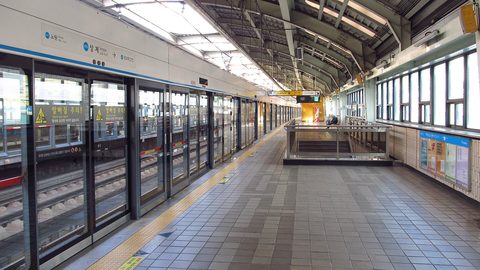 Getting Around South Korea With T-Money Cards KTX Trains and Intercity Buses
From tapping a T-money card on a Seoul city bus to navigating the Express Bus Terminal for a KTX ride, here is how South Korea's transport actually works.
Getting Around South Korea With T-Money Cards KTX Trains and Intercity Buses
From tapping a T-money card on a Seoul city bus to navigating the Express Bus Terminal for a KTX ride, here is how South Korea's transport actually works.
-
 South Korea Entry Rules K-ETA Tourist Visas and What Southeast Asian Passports Need
A practical guide to South Korea's K-ETA system and tourist visa rules, with specific requirements for Philippine, Indonesian, Vietnamese, and other Southeast Asian passports.
South Korea Entry Rules K-ETA Tourist Visas and What Southeast Asian Passports Need
A practical guide to South Korea's K-ETA system and tourist visa rules, with specific requirements for Philippine, Indonesian, Vietnamese, and other Southeast Asian passports.
-
 Eating Cheaply in South Korea Halal Food in Seoul and Budget Street Food Finds
Where to eat on a tight budget in South Korea, plus a dedicated guide to finding halal Korean food, from Itaewon barbecue to Myeongdong street stalls.
Eating Cheaply in South Korea Halal Food in Seoul and Budget Street Food Finds
Where to eat on a tight budget in South Korea, plus a dedicated guide to finding halal Korean food, from Itaewon barbecue to Myeongdong street stalls.
-
 One Week in South Korea A Line by Line Cost Breakdown for Budget Travelers
A detailed line-by-line account of every won spent during one week in South Korea, from T-money card top-ups to jjigae in a Namdaemun alley.
One Week in South Korea A Line by Line Cost Breakdown for Budget Travelers
A detailed line-by-line account of every won spent during one week in South Korea, from T-money card top-ups to jjigae in a Namdaemun alley.
-
Seoul
Seoul does not have to be expensive. A district-by-district guide to free attractions, cheap street eats near subway exits, and the palace days that cost nothing.
-
Busan
Take the night train from Seoul, wake up on Haeundae Beach, and do Busan on a budget. The cheap seafood markets, free viewpoints, and how to book that train.
-
Korea or Japan for a Cheap Trip The Honest Arithmetic Breakdown
A direct cost comparison of street food, transit passes, and budget beds to decide whether South Korea or Japan is cheaper for your next trip.