Jeonju on a Budget from Seoul in One Night
Jeonju is the best budget overnight from Seoul. The express bus cost, the free hanok village streets, and the original bibimbap restaurant with the price on the wall.
- Flag
-

- ISO code
- KR
- Population
- 638,421
- Currency
- KRW
- Timezone
- Asia/Seoul
Jeonju Hanok Village Without the Tourist Markup
Most overnight trips from Seoul to Jeonju lose money on the wrong ticket, a pointless cultural complex fee, and a bibimbap bowl that costs double what it should. You can do it better for under 100,000 won per person including the bus, the meal, the bed, and zero regret. The exact express bus departure from Seoul's Central City Terminal, the won amount to pay, the timed arrival, the free streets versus the paid section, the specific bibimbap restaurant that claims origin status with its price on the wall, and a hanok guesthouse that costs less than a Seoul dorm—these are the details that turn an overnight trip into cash spent on what matters, not on what a brochure told you to buy.
The Bus, Not the Train
Why the Express Bus Wins on Price
The KTX from Seoul Station to Jeonju takes 1 hour 40 minutes to 2 hours and costs 34,400 won for standard class. That is the fastest way and it is not cheap. The express bus from Seoul's Central City Terminal (connected to Express Bus Terminal Station on Subway Line 3 and 9) runs 2 hours 30 minutes to 3 hours and costs 14,600 won in Economy class. Book that. The extra travel time versus KTX is about one hour each way. You save enough per direction to cover a meal. For a budget overnight that is the difference between eating and not eating. The bus drops you at Jeonju Express Bus Terminal, a 10 minute taxi ride or a 25 minute walk from the Hanok Village. Arrive by 10:00 on a weekday to hit the village before the 11:00 peak.
What to Skip at the Village
The Hanok Village covers roughly 0.3 square kilometres with over 800 traditional buildings. The vast majority of ground floor spaces, as of 2024, are occupied by cafes, souvenir and hanbok rental shops. You do not need to pay to walk the lanes. The free streets between the main alley and the river give you the same roof lines, the same mud walls, and the same wooden doors as the paid sections. The Gyeonggijeon Shrine and the Omokdae pavilion cost a small entry fee and are worth it because they offer a raised view of the tile roofs. The paid folk village section, which some maps label as a museum complex, is a collection of relocated buildings with actors in period costume. Skip it. The atmosphere you came for appears between 07:00 and 10:00, before the first tour bus arrives. Set an alarm.

The Original Bibimbap at a Specific Counter
Jeonju was designated a UNESCO Creative City of Gastronomy in 2012, with bibimbap as its emblem dish. Several restaurants claim the origin recipe. The one to go to is Hangukjip (also written as Hanguk House). It sits inside the Hanok Village at 13-6, Pungnamdong 3(sam)-gil, Wansan-gu. The price on the wall in 2024 was 12,000 won for the standard Jeonju bibimbap with raw egg and seasoned vegetables. That falls inside the typical 10,000 to 15,000 won range. The restaurant operates on a queue system, no reservations. Come at 11:30, just before the lunch crowd, and you wait maybe ten minutes. Order the dolsot (stone pot) version for crispy rice at the bottom. The banchan is refillable, the broth is on the house. Do not order the set menu that includes fried fish or beef skewers unless you feed two people. It pushes the bill up and you do not need it.
Halal and Other Dietary Options Nearby
If you need halal food, the only KMF certified restaurant as of the 2025 listing is Al-Falah Restaurant at 22-5, Eunhaeng-ro near the Hanok Village. Certification requires annual renewal, so check the current Korea Muslim Federation listing before you go. The Jeonju Islamic Center at 45-1, Jeonjugaeksa 5-gil provides a prayer hall for daily prayers and Jumu'ah but has no permanent halal certified kitchen on site as of the 2025 KMF listing. For vegetarian options, request the bibimbap without egg and beef namul at Hangukjip or any standard restaurant in the alley behind the main street.
A Guesthouse for Under 50,000 Won
The 2025 observed price range for a hanok guesthouse double room in Jeonju was 50,000 to 150,000 won per night depending on season, amenities, and location within the village. The cheapest options cluster on the north side of the village near the river. Look for Hwaom Guesthouse or similar shared bathroom hanok stays. A private room with ondol floor heating, a shared toilet and shower on the hallway, within a 300 year old structure, cost 45,000 to 55,000 won in the same 2025 observations. That is less than a dorm bed in a Seoul hostel right now. Book through a Korean booking platform like Yeogi or Good Choice, not an international aggregator that adds a 15 to 20 percent commission. Walk to the guesthouse from the bus terminal, drop your bag at 10:30, and you have the full day and the next morning to cover the village, the bibimbap, and the quiet hours.
If You Need a Second Night
One night is sufficient for the Hanok Village and bibimbap. You arrive morning, walk the free lanes, eat lunch, explore the back alleys in the afternoon, sleep in the hanok, wake early for the 07:00 atmosphere, and leave by 13:00 the next day. Two nights only make sense if you use Jeonju as a base for day trips to the Maisan mountain rock formations or Jinan county. The village alone does not require a second night. Book the return bus before you leave Seoul or at the Jeonju terminal as soon as you arrive. The 17:00 and 18:00 Economy buses fill fastest on Sunday and Friday.


| Mode | Price (One Way) | Travel Time | Terminal |
|---|---|---|---|
| Express Bus Economy | 14,600 won | 2.5 to 3 hours | Central City Terminal |
| Express Bus Excellent | 19,000 won | 2.5 to 3 hours | Central City Terminal |
| Express Bus Premium | 28,600 won | 2.5 to 3 hours | Central City Terminal |
| KTX Standard | 34,400 won | 1.75 to 2 hours | Seoul Station |
Honest Caveat: When to Skip This Trip
This trip works best for someone who wants a cultural add-on to a Seoul itinerary without the cost of a second city. If you hate early mornings, crowds, or simple rice bowls, skip it. The village is a tourist zone. Over 10 million people visited per year before the pandemic. The commercial density is high. The magic of the 07:00 hour evaporates by 11:00. A weekend overnight costs more than a weekday one. If you cannot wake early and you cannot dodge the weekend, the value drops. The cheap guesthouse requires sharing a bathroom. The cheap bus takes three hours. Decide honestly if that trade off is yours.
Common Questions
What is the cheapest way to get from Seoul to Jeonju for an overnight trip?
The Economy class express bus from Seoul's Central City Terminal costs 14,600 won one way. Travel time is 2.5 to 3 hours. That saves you money over the KTX standard fare of 34,400 won.
What time should I arrive at the Hanok Village to avoid crowds?
Arrive between 07:00 and 10:00 on a weekday. The village is nearly empty before 10:00. Peak crowding runs from 11:00 to 17:00 on weekends and holidays.
Do I need to pay to enter the Hanok Village?
No. The free streets give you the same architecture and atmosphere as any paid section. You only need money for Gyeonggijeon Shrine or Omokdae viewpoint if you want a raised view of the roofs.
Which restaurant serves the original Jeonju bibimbap and how much does it cost?
Hangukjip (Hanguk House) at 13-6, Pungnamdong 3-gil claims origin status. The standard bowl was 12,000 won in 2024. Order the dolsot version for 14,000 won.
What is the cheapest hanok guesthouse option?
Shared bathroom private rooms on the north side of the village near the river cost 45,000 to 55,000 won per night (2025 observations). This is less than a dorm bed in a Seoul hostel.
Read next
-
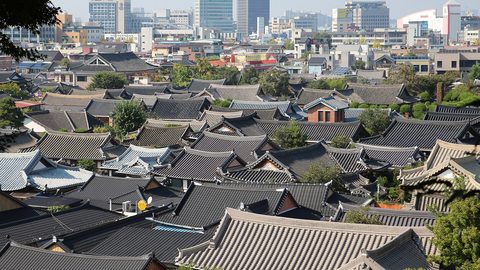 Eating in Jeonju Beyond Bibimbap Inside the Hanok Village Food Stalls and Tea Rooms
Walk through Jeonju Hanok Village for a full day of eating, from morning kongnamul gukbap and bibimbap to evening makgeolli and the original PNB Choco Pie.
Eating in Jeonju Beyond Bibimbap Inside the Hanok Village Food Stalls and Tea Rooms
Walk through Jeonju Hanok Village for a full day of eating, from morning kongnamul gukbap and bibimbap to evening makgeolli and the original PNB Choco Pie.
-
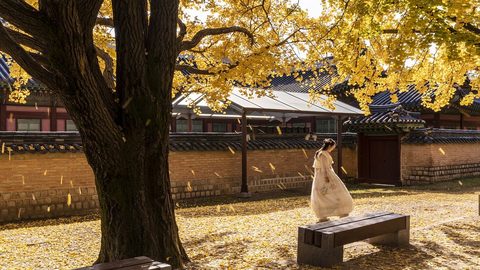 South Korea on a Backpacker Budget What It Really Costs and Where the Cash Goes
A realistic breakdown of what a budget trip to South Korea costs, from Seoul street food to intercity transport, so you can plan without nasty surprises.
South Korea on a Backpacker Budget What It Really Costs and Where the Cash Goes
A realistic breakdown of what a budget trip to South Korea costs, from Seoul street food to intercity transport, so you can plan without nasty surprises.
-
 Praying in South Korea Seoul Mosques Musallas and What Muslim Travelers Should Expect
A practical guide to mosques, musallas, and prayer rooms in Seoul and beyond, including the Itaewon Central Mosque, Incheon Airport facilities, and what to expect for Jummah.
Praying in South Korea Seoul Mosques Musallas and What Muslim Travelers Should Expect
A practical guide to mosques, musallas, and prayer rooms in Seoul and beyond, including the Itaewon Central Mosque, Incheon Airport facilities, and what to expect for Jummah.
-
 Getting By in Seoul Without Speaking Korean What Actually Works
You do not need Korean to travel Seoul, but one hour with Hangul and the right app changes everything. Here is what actually works on the ground.
Getting By in Seoul Without Speaking Korean What Actually Works
You do not need Korean to travel Seoul, but one hour with Hangul and the right app changes everything. Here is what actually works on the ground.
-
 Seoul SIM Card eSIM and Pocket WiFi Prices Compared Honestly
A straight price comparison of SIM cards, eSIMs and pocket wifi for Seoul, with the real pickup costs at Incheon Airport and which option wastes your money.
Seoul SIM Card eSIM and Pocket WiFi Prices Compared Honestly
A straight price comparison of SIM cards, eSIMs and pocket wifi for Seoul, with the real pickup costs at Incheon Airport and which option wastes your money.
-
 Budget Flights to South Korea Which Airlines to Book and What to Expect
Compare Scoot, AirAsia X, Jeju Air, Jin Air, and T'way fares from Southeast Asia to Seoul. Real all-in costs, baggage fees, and timing tips.
Budget Flights to South Korea Which Airlines to Book and What to Expect
Compare Scoot, AirAsia X, Jeju Air, Jin Air, and T'way fares from Southeast Asia to Seoul. Real all-in costs, baggage fees, and timing tips.
-
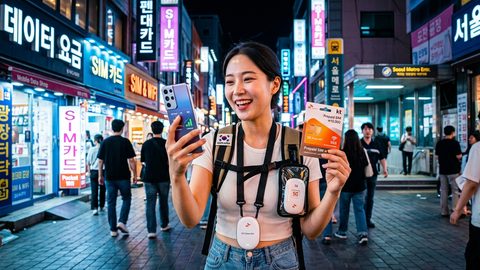 Cheap Data in South Korea — SIM Cards, eSIMs, and Pocket WiFi Compared
Airport SIM cards, eSIMs, and pocket WiFi rentals compared for South Korea travel. Real 2025 prices and per-day cost by trip length.
Cheap Data in South Korea — SIM Cards, eSIMs, and Pocket WiFi Compared
Airport SIM cards, eSIMs, and pocket WiFi rentals compared for South Korea travel. Real 2025 prices and per-day cost by trip length.
-
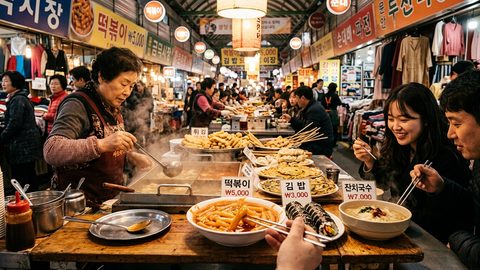 Eating at South Korea's Traditional Markets on Less Than 10,000 Won
Eat well at South Korea's best traditional markets for under 10,000 won. Real dish prices from Gwangjang, Gukje, and Jeonju's Nambu Market.
Eating at South Korea's Traditional Markets on Less Than 10,000 Won
Eat well at South Korea's best traditional markets for under 10,000 won. Real dish prices from Gwangjang, Gukje, and Jeonju's Nambu Market.