The Real Cost of Staying Connected in Seoul
A straight price comparison of SIM cards, eSIMs and pocket wifi for Seoul, with the real pickup costs at Incheon Airport and which option wastes your money.

.jpg)
Seoul SIM, eSIM, and Pocket WiFi Prices Compared
You step off the plane at Incheon Terminal 1, and within 30 seconds you see three counters side by side: SK Telecom, KT, and LG U+. Each has a uniformed employee holding a tablet. Each sells the same product at a different price. The comparison below tells you exactly which one to buy, how much to pay, and what hidden costs turn a cheap deal into an expensive mistake.
For a short trip of 1 to 14 days, an eSIM is the cheapest option at ₩15,000 to ₩55,000 for 30 days of data. For trips of 15 to 30 days, a prepaid SIM beats eSIM pricing. Pocket WiFi wins only for trips of 7 or more days when you share the connection across multiple devices. Those are the rules. Now here is the fine print.
Prepaid SIM Cards: the Airport Tax You Should Skip
Buying a prepaid SIM at the Incheon counter is the most expensive way to get data. The 2024 rate for a 30-day data-only SIM at SK Telecom and KT is exactly ₩38,500. LG U+ undercuts both at ₩35,200. All three operators cover more than 99% of populated areas on 4G LTE, and over 90% of urban areas on 5G as of 2025, according to their annual reports filed with the Ministry of Science and ICT. Network quality differences between the three are not meaningful for a tourist.
Pre-Order Online and Pick Up at the Same Counter
Save money by pre-ordering online. Trazy sells a KT 30-day data-only SIM for ₩27,500. Klook sells SK Telecom for ₩29,900. You pick it up at the same terminal counter. Same product, same speed. The difference is you pay online before you fly. If you land at 1am and the counters are closed, the online voucher still works the next morning. No counter worker is going to turn away a prepaid pickup at 8am.
ESIM: the Digital Shortcut with One Big Catch
An eSIM is faster to activate and cheaper upfront. uPhone sells a 30-day 10GB data-only eSIM for ₩18,500. Klook sells an SK Telecom 30-day unlimited data eSIM for ₩35,000. That undercuts the cheapest airport SIM for the same data cap. The price advantage holds for trips up to 14 days. For longer stays, a prepaid SIM becomes cheaper on a per-day basis.
The Locked Phone Problem
Here is where eSIMs fail. If your phone is carrier locked to a US or European network, the eSIM slot is disabled. You cannot activate a Korean eSIM on a locked device. That rule applies to AT&T, T-Mobile, Verizon, and most European carriers. The only workaround at 1am is a pocket WiFi unit from a 24-hour convenience store, which has its own hidden cost. Check your phone's lock status in Settings before you buy. If it says SIM locked, skip the eSIM and buy the prepaid card.
Pocket WiFi: the Hidden Deposit and When it Makes Sense
Pocket WiFi rental costs ₩3,000 to ₩8,000 per day. That rate is competitive only when you share it across three or more phones. For a solo traveller on a 4-day trip, a pocket WiFi unit costs ₩12,000 to ₩32,000, which is higher than an eSIM at ₩15,000 to ₩55,000 for the month. The math flips at 7 days with a group of four. Splitting ₩6,000 a day among four people means each pays ₩1,500 per day, the lowest per-person cost available.
The Deposit That Can Cost You Everything
The hidden cost is the deposit. KT Roaming charges a refundable deposit per unit. SK Telecom and LG U+ do the same. That cash is held on your credit card for the rental period. If you lose the unit, the battery pack, the charging cable, or the carrying case, the deposit is forfeited. The full amount. Insurance does not cover it. Return the kit to the terminal counter before you go through security. The counters inside the departure hall close 30 minutes before each flight.


Why You Still Want a Voice SIM Even If You Only Need Data
A data-only SIM cannot send SMS messages. That kills your access to Baemin and Coupang Eats for food delivery, Catch Table for restaurant queueing, and Kakao T for taxi hailing. All four apps require SMS verification for full features, confirmed by each app's developer documentation in 2025. A data-only SIM lets you browse the web, use maps, and stream video. It cannot order fried chicken to your hotel room at 11pm.
Buy a voice SIM instead of a data-only SIM if you plan to use any of these services. The price difference at the terminal counter is roughly ₩5,000 more than the data-only rates above. The Incheon pickup surcharge for online-ordered voice SIMs adds ₩5,000 to ₩15,000 compared to an online-only eSIM. You pay a premium for phone number access.
Free WiFi That Works Without a Local Number
Seoul has free public WiFi on every subway station, every public bus, and every major park and square. Five network names cover the city: Seoul_Secure, PublicWiFi@Seoul, WiFi_KT_Free, SK_WiFi_GIGA, and U+zone. All five work without a local phone number. You connect once, accept the terms, and the device remembers the network in central Seoul.
The Starbucks Backup Plan
The single exception that works better than any other option is a specific cafe chain. Starbucks Korea offers free WiFi that does not require SMS verification, a separate login page, or a purchase receipt. You walk in, select the Starbucks network, tap accept, and you have full speed internet within 15 seconds. That is faster than any terminal SIM activation and costs zero won. Every Starbucks in Seoul has this. Use it as your backup when your main data runs out, your eSIM fails on a locked phone, or you arrive at 1am and every counter is closed.
Read next
-
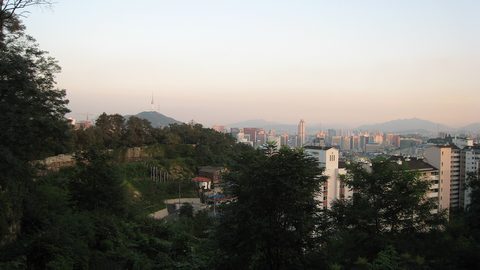
 South Korea Budget Stays Guesthouses Jjimjilbang Goshiwon and Love Motels Explained
A no-surprises guide to South Korea's cheapest beds, from sleeping on a jjimjilbang mat in Seoul to renting a tiny goshiwon room or a love motel by the night.
South Korea Budget Stays Guesthouses Jjimjilbang Goshiwon and Love Motels Explained
A no-surprises guide to South Korea's cheapest beds, from sleeping on a jjimjilbang mat in Seoul to renting a tiny goshiwon room or a love motel by the night.
-
 Best Time to Visit South Korea and the Two Peak Seasons That Double Your Costs
South Korea's two lunar calendar holidays, Seollal and Chuseok, can double your travel costs. Here is when to go instead for decent weather and budget-friendly prices.
Best Time to Visit South Korea and the Two Peak Seasons That Double Your Costs
South Korea's two lunar calendar holidays, Seollal and Chuseok, can double your travel costs. Here is when to go instead for decent weather and budget-friendly prices.
-
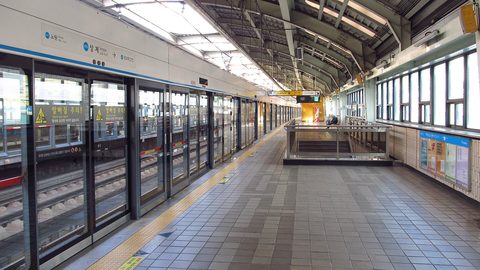 Getting Around South Korea With T-Money Cards KTX Trains and Intercity Buses
From tapping a T-money card on a Seoul city bus to navigating the Express Bus Terminal for a KTX ride, here is how South Korea's transport actually works.
Getting Around South Korea With T-Money Cards KTX Trains and Intercity Buses
From tapping a T-money card on a Seoul city bus to navigating the Express Bus Terminal for a KTX ride, here is how South Korea's transport actually works.
-
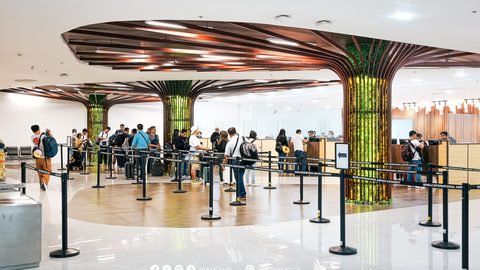 South Korea Entry Rules K-ETA Tourist Visas and What Southeast Asian Passports Need
A practical guide to South Korea's K-ETA system and tourist visa rules, with specific requirements for Philippine, Indonesian, Vietnamese, and other Southeast Asian passports.
South Korea Entry Rules K-ETA Tourist Visas and What Southeast Asian Passports Need
A practical guide to South Korea's K-ETA system and tourist visa rules, with specific requirements for Philippine, Indonesian, Vietnamese, and other Southeast Asian passports.
-
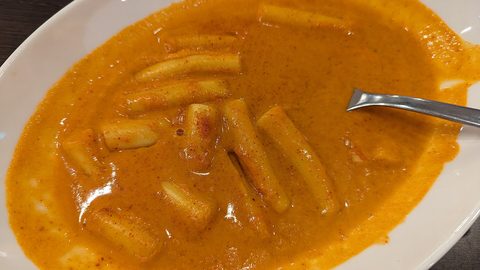 Eating Cheaply in South Korea Halal Food in Seoul and Budget Street Food Finds
Where to eat on a tight budget in South Korea, plus a dedicated guide to finding halal Korean food, from Itaewon barbecue to Myeongdong street stalls.
Eating Cheaply in South Korea Halal Food in Seoul and Budget Street Food Finds
Where to eat on a tight budget in South Korea, plus a dedicated guide to finding halal Korean food, from Itaewon barbecue to Myeongdong street stalls.
-
 One Week in South Korea A Line by Line Cost Breakdown for Budget Travelers
A detailed line-by-line account of every won spent during one week in South Korea, from T-money card top-ups to jjigae in a Namdaemun alley.
One Week in South Korea A Line by Line Cost Breakdown for Budget Travelers
A detailed line-by-line account of every won spent during one week in South Korea, from T-money card top-ups to jjigae in a Namdaemun alley.
-
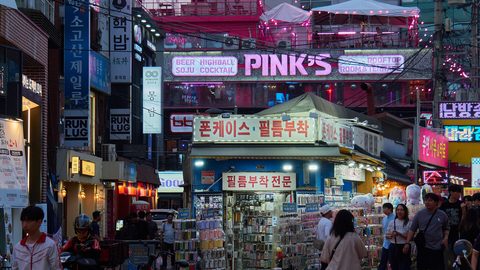 Seoul
Seoul does not have to be expensive. A district-by-district guide to free attractions, cheap street eats near subway exits, and the palace days that cost nothing.
Seoul
Seoul does not have to be expensive. A district-by-district guide to free attractions, cheap street eats near subway exits, and the palace days that cost nothing.
-
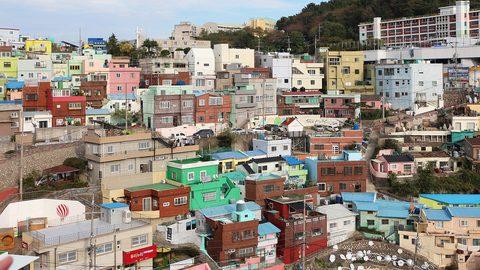 Busan
Take the night train from Seoul, wake up on Haeundae Beach, and do Busan on a budget. The cheap seafood markets, free viewpoints, and how to book that train.
Busan
Take the night train from Seoul, wake up on Haeundae Beach, and do Busan on a budget. The cheap seafood markets, free viewpoints, and how to book that train.
-
 Korea or Japan for a Cheap Trip The Honest Arithmetic Breakdown
A direct cost comparison of street food, transit passes, and budget beds to decide whether South Korea or Japan is cheaper for your next trip.
Korea or Japan for a Cheap Trip The Honest Arithmetic Breakdown
A direct cost comparison of street food, transit passes, and budget beds to decide whether South Korea or Japan is cheaper for your next trip.