Budget Showdown South Korea Versus Japan
A direct cost comparison of street food, transit passes, and budget beds to decide whether South Korea or Japan is cheaper for your next trip.

Korea or Japan on a Budget? the Real Floor is Not What You Think
The common assumption is that Japan is the expensive one and Korea is the cheap one. Travellers repeat it like a law of gravity. But the yen has been weak for years and the won has strengthened. A bowl of ramen in Tokyo now costs about the same as a bowl of guksu in Seoul. The real difference between these two trips is not the price of a single meal or a night in a dorm. It is the floor of the daily budget: how low can you push one full day in each country before the math stops working.
South Korea wins that test. But the margin is thinner than most budget guides admit, and the winner changes depending on how you travel. The weak yen closes the gap on restaurants and snacks. Korea holds its lead on transport and accommodation. The gap on flights depends entirely on where you are flying from. Here is the honest arithmetic for a backpacker in 2026.
| Expense | Seoul (KRW) | Tokyo (KRW) |
|---|---|---|
| Dorm bed, one night | ₩15,000–₩35,000 | ₩25,000–₩50,000 |
| Budget private room, one night | ₩40,000–₩70,000 | ₩60,000–₩100,000 |
| Single subway or bus ride (base fare, IC card) | ₩1,500 | ₩1,800–₩2,200 |
| Street food item | ₩2,000–₩5,000 | ₩3,000–₩6,000 |
| Budget restaurant meal | ₩7,000–₩12,000 | ₩8,000–₩14,000 |
| K-ETA fee (one-time, 3-year validity) | ₩10,000 | N/A |
| Japan tourist visa fee (where required) | N/A | Varies by nationality; single-entry ~₩30,000–₩50,000 |
What the Table Does Not Show: Entry Cost and Transport Shape the Real Gap
Entry Fees And Visa Barriers
If you hold an Indonesian, Philippine, Malaysian or Thai passport, your entry costs are not the same for both countries. For Malaysia and Thailand, Japan remains visa-free up to 90 or 15 days respectively. But Indonesia and the Philippines require a single-entry tourist visa for Japan, costing roughly ₩30,000 to ₩50,000 per application. South Korea requires a K-ETA from all visa-free entrants. The K-ETA costs ₩10,000 and is valid for three years. That is a one-time fee that covers multiple trips. For Indonesian and Philippine passport holders, the visa cost for Japan eats roughly two to three days of Seoul dorm savings before you even land.
Flight Price Differences
Flights from Jakarta, Kuala Lumpur, Manila and Bangkok all show the same pattern: Seoul is consistently cheaper than Tokyo by about ₩20,000 to ₩50,000 on the low end of the annual range. From Manila, a one-way to Incheon starts at ₩140,000, while Narita starts at ₩160,000. From Kuala Lumpur, Incheon starts at ₩160,000 versus Narita at ₩190,000. From Bangkok, Incheon at ₩170,000 versus Narita at ₩200,000. The gap is real but small. It is not a deciding factor for a week-long trip. It becomes significant only on a very tight budget or a longer stay.
Transport Within The City
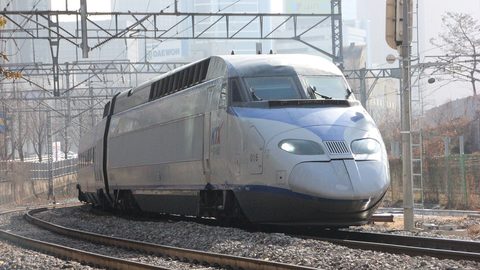
Seoul's single subway or bus ride costs a flat ₩1,500 on a T-money card. Tokyo's base fare on an IC card starts at ₩1,800 and can go to ₩2,200 for a single journey on the Tokyo Metro or Toei lines. Take four rides a day: Seoul costs ₩6,000. Tokyo costs more. Over a week, that saving adds up. A Korea Rail Pass for intercity travel is significantly cheaper than a Japan Rail Pass, especially if you buy it before arrival. Korea's smaller geography means you spend less time and money moving between cities anyway.
Accommodation Floor
The cheapest dorm bed in Seoul is ₩15,000 a night. In Tokyo, the cheapest dorm starts at ₩25,000. A budget private room in Seoul starts at ₩40,000. In Tokyo, that same room starts at ₩60,000. The gap per night for a dorm is ₩10,000 minimum. For a private room, it is ₩20,000 minimum. Over ten nights, that is ₩100,000 to ₩200,000 saved in Seoul. This is the single biggest line item where Korea pulls ahead. A goshiwon (a tiny room often used by students) in Seoul can go as low as ₩200,000 per month. A capsule hotel in Tokyo rarely drops below ₩30,000 per night. The accommodation floor is lower in Korea by a clear margin.
Where the Gap Closes: Food, Halal Options, and the Weak Yen
Street Food And Restaurant Parity
This is where the weak yen does most of its work. A Seoul street food item like tteokbokki or gimbap costs ₩2,000 to ₩5,000. A Tokyo street food item like takoyaki or onigiri costs ₩3,000 to ₩6,000. The overlap in the ranges is larger than most travellers expect. A budget restaurant meal in Seoul (gukbap, jjigae, bibimbap) runs ₩7,000 to ₩12,000. In Tokyo (ramen, gyudon, teishoku), the same meal costs ₩8,000 to ₩14,000. That is a ₩2,000 gap on the high end and only ₩1,000 on the low end. Eat one street snack and one budget meal per day and Tokyo costs about ₩2,000 to ₩3,000 more than Seoul. That is negligible compared to the accommodation savings.
Halal-Friendly Eating
If you eat halal, Tokyo has more certified options: 320+ halal-certified restaurants versus 158 in Seoul, based on counts from the Japan Halal Foundation and the Korea Muslim Federation as of 2025. Tokyo Camii in Yoyogi-Uehara and Seoul Central Mosque in Itaewon both offer prayer facilities. For a Muslim traveller who needs certified halal food every meal, Tokyo is easier. The cost of eating halal in Tokyo is higher than the cost of eating standard budget meals, but the availability is better. That safety net matters if you cannot risk eating from an uncertified street cart.


.jpg)
Worth it if
- Seoul wins on accommodation: dorm beds are ₩10,000 cheaper per night, and private rooms are ₩20,000 cheaper
- Seoul wins on local transport: flat ₩1,500 base fare versus ₩1,800–₩2,200 in Tokyo
- Seoul wins on entry cost: K-ETA costs ₩10,000 once, while Indonesia and Philippines require a visa for Japan
- Tokyo wins on halal variety: 320+ certified restaurants versus 158 in Seoul
- Tokyo wins on street food and budget meal price parity: the weak yen has nearly closed the gap with Seoul
- Tokyo wins on geographic scale: it is larger, which means more free attractions and neighbourhoods to explore without spending
- Seoul wins for first-time budget travellers from Southeast Asia: lower flights, simpler entry, and a compact city with concentrated attractions
- Japan wins for repeat or experienced budget travellers who can offset the higher base costs with long-distance bus passes and capsule hotels
Skip it if
- Seoul's halal scene is smaller; you will plan your route around Itaewon or Myeongdong
- Tokyo's dorm and private room prices push the daily floor above ₩50,000 even in a strict budget scenario
Read next
-
 South Korea Budget Stays Guesthouses Jjimjilbang Goshiwon and Love Motels Explained
A no-surprises guide to South Korea's cheapest beds, from sleeping on a jjimjilbang mat in Seoul to renting a tiny goshiwon room or a love motel by the night.
South Korea Budget Stays Guesthouses Jjimjilbang Goshiwon and Love Motels Explained
A no-surprises guide to South Korea's cheapest beds, from sleeping on a jjimjilbang mat in Seoul to renting a tiny goshiwon room or a love motel by the night.
-
 Best Time to Visit South Korea and the Two Peak Seasons That Double Your Costs
South Korea's two lunar calendar holidays, Seollal and Chuseok, can double your travel costs. Here is when to go instead for decent weather and budget-friendly prices.
Best Time to Visit South Korea and the Two Peak Seasons That Double Your Costs
South Korea's two lunar calendar holidays, Seollal and Chuseok, can double your travel costs. Here is when to go instead for decent weather and budget-friendly prices.
-
 Getting Around South Korea With T-Money Cards KTX Trains and Intercity Buses
From tapping a T-money card on a Seoul city bus to navigating the Express Bus Terminal for a KTX ride, here is how South Korea's transport actually works.
Getting Around South Korea With T-Money Cards KTX Trains and Intercity Buses
From tapping a T-money card on a Seoul city bus to navigating the Express Bus Terminal for a KTX ride, here is how South Korea's transport actually works.
-
 South Korea Entry Rules K-ETA Tourist Visas and What Southeast Asian Passports Need
A practical guide to South Korea's K-ETA system and tourist visa rules, with specific requirements for Philippine, Indonesian, Vietnamese, and other Southeast Asian passports.
South Korea Entry Rules K-ETA Tourist Visas and What Southeast Asian Passports Need
A practical guide to South Korea's K-ETA system and tourist visa rules, with specific requirements for Philippine, Indonesian, Vietnamese, and other Southeast Asian passports.
-
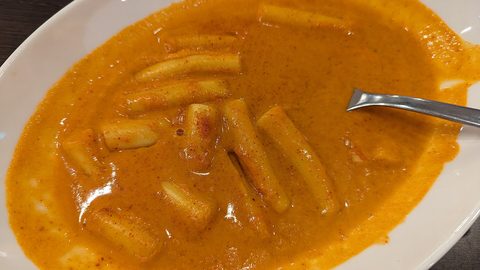 Eating Cheaply in South Korea Halal Food in Seoul and Budget Street Food Finds
Where to eat on a tight budget in South Korea, plus a dedicated guide to finding halal Korean food, from Itaewon barbecue to Myeongdong street stalls.
Eating Cheaply in South Korea Halal Food in Seoul and Budget Street Food Finds
Where to eat on a tight budget in South Korea, plus a dedicated guide to finding halal Korean food, from Itaewon barbecue to Myeongdong street stalls.
-
 One Week in South Korea A Line by Line Cost Breakdown for Budget Travelers
A detailed line-by-line account of every won spent during one week in South Korea, from T-money card top-ups to jjigae in a Namdaemun alley.
One Week in South Korea A Line by Line Cost Breakdown for Budget Travelers
A detailed line-by-line account of every won spent during one week in South Korea, from T-money card top-ups to jjigae in a Namdaemun alley.
-
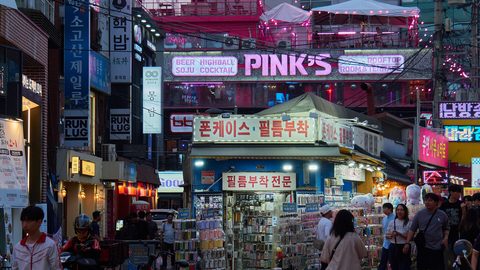 Seoul
Seoul does not have to be expensive. A district-by-district guide to free attractions, cheap street eats near subway exits, and the palace days that cost nothing.
Seoul
Seoul does not have to be expensive. A district-by-district guide to free attractions, cheap street eats near subway exits, and the palace days that cost nothing.
-
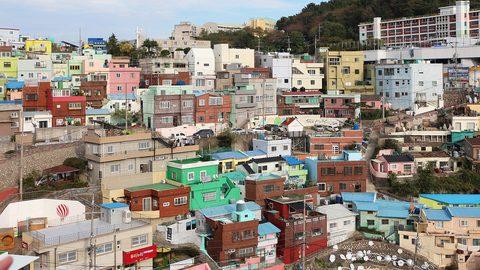 Busan
Take the night train from Seoul, wake up on Haeundae Beach, and do Busan on a budget. The cheap seafood markets, free viewpoints, and how to book that train.
Busan
Take the night train from Seoul, wake up on Haeundae Beach, and do Busan on a budget. The cheap seafood markets, free viewpoints, and how to book that train.
-
 KTX or Intercity Bus When the Korean Train Is Worth Double the Price