Mosques, Prayer Rooms, and Musallas for Muslim Travelers in South Korea
A practical guide to mosques, musallas, and prayer rooms in Seoul and beyond, including the Itaewon Central Mosque, Incheon Airport facilities, and what to expect for Jummah.


Seoul’s Prayer Spaces Are Not Absent—They Are Just Specific
Most Muslim travelers assume South Korea has one mosque and nothing else. That is half true. Seoul has exactly one full size mosque that holds Jummah: the Seoul Central Mosque in Itaewon. But the country has at least five more mosques, plus prayer rooms inside both Incheon Airport terminals, two major shopping malls, three campuses, and a growing number of transit hubs. The problem is not absence. It is knowing which spaces are gender separated, which have wudu facilities, and which are open at 11 p.m. on a Tuesday. Verified locations and their practical limits matter so you do not show up to a locked door.
The Korea Muslim Federation (KMF) and the Korea Tourism Organization (KTO) publish the most reliable data. The KMF 2025 annual report counts 157 KMF halal certified restaurants nationwide. The 2025 KTO halal restaurant guide lists prices, addresses, and certification status for every one. Both sources are the ones to trust. A self declared halal sign on a window in Itaewon means something different from a KMF green and white circular logo with a two year validity period. Know the difference before you eat.
The Anchor: Seoul Central Mosque in Itaewon
Seoul Central Mosque sits at 39 Usadan ro 10 gil in Yongsan gu, Itaewon. It opened in 1976 and holds 1,500 worshippers at capacity. Friday khutbah starts at 12:45 p.m. KST with prayer at 1:00 p.m. KST. The sermon runs in Korean, English, and Arabic. This is the hub for the city's Muslim community and the safest bet for Jummah, Eid, and Ramadan taraweeh. Wudu facilities are inside and separate for men and women. The women's section is on the upper floor. Arrive by 12:15 for a spot during Friday prayer from March through October when attendance peaks at over 1,200.
Within one kilometer of the mosque, the 2025 KTO report lists roughly 20 certified and self declared halal eateries. Main dishes run 8,000 to 25,000 KRW. That is your best concentration of halal food in the country. Itaewon itself is a former U.S. Army base area and is used to foreigners. Walk from the mosque to the restaurants in five to ten minutes. The failure case: you arrive after maghrib in winter when prayer times shift early and many kitchens close by 9:00 p.m. KST. Eat before you pray, or check the KTO guide for the few spots that stay open until 10:00 p.m.
Verified Musallas in Transit Hubs, Malls, and Universities
Incheon International Airport (Both Terminals)
Incheon Airport is the best equipped transit point in the country. Terminal 1 has prayer rooms on the 4th floor near Gate 28 (airside) and on the 1st floor near Arrival Hall A (landside). Terminal 2 has a 4th floor room near Gate 252 (airside) and a 1st floor room near Arrival Hall (landside). Every room has separate male and female sections, ablution stations with running water, Qibla markers on the floor or wall, and prayer mats. No booking is needed. If you have a layover over six hours and want to sleep, exit landside to the capsule hotels near the transportation center. The prayer rooms are open 24 hours.
Seoul Station and Lotte World Mall
Seoul Station does not have a permanent musalla as of the 2025 KMF venue list. Use the quiet corners on the upper waiting area near tracks 1 through 4. KMF guidance confirms public space prayer is tolerated without reported interference. For a proper room, go to Lotte World Mall in Songpa gu, B1 floor near Lotte Mart. It has an ablution area, a Qibla marker, and prayer mats. COEX Mall in Gangnam gu, also B1 floor inside Starfield COEX Mall, has an ablution station, Qibla marker, and separate male and female sections. Both malls are open 10:30 a.m. to 10:00 p.m. KST. Arrive before 9:30 p.m. to use them. After 10:00 p.m., the malls close and the rooms lock.
Campus Prayer Rooms
Three major schools have verified musallas. Seoul National University has a room in Building 67 on the Gwanak Campus in Gwanak gu. Korea University has a room in the Central Plaza basement on the Anam Campus in Seongbuk gu. Yonsei University has a room in Underwood Hall basement on the Sinchon Campus in Seodaemun gu. Student Muslim associations report all three rooms, but none are regularly inspected by KMF. Verify opening hours on campus before relying on them, especially during semester breaks when buildings lock early. The failure case: arrive on a Sunday in August and find the building sealed. Use a public park or a quiet corner in a 24 hour coffee shop instead.
| Mosque Name | Address | City | Friday Prayer Languages | Friday Prayer Time (KST) |
|---|---|---|---|---|
| Seoul Central Mosque | 39 Usadan-ro 10-gil, Yongsan-gu | Seoul | Korean, English, Arabic | 13:00 (khutbah 12:45) |
| Busan Al-Fatah Mosque | 30-1 Namsan-dong, Geumjeong-gu | Busan | Korean, English, Arabic | 13:15 |
| Daegu Islamic Center | 686-1 Sangin-dong, Dalseo-gu | Daegu | Korean, Arabic | Contact center |
| Jeonju Islamic Center | 15-5 Jeonjugaeksa 3-gil, Wansan-gu | Jeonju | Korean, Arabic | Contact center |
| Ansan Masjid Al-Ikhlas | 16-5 Wongok-ro, Danwon-gu | Ansan-si, Gyeonggi-do | Korean, English, Arabic, Urdu, Indonesian | 13:00 |
Busan and Other Regional Mosques for South Coast Travelers
Busan Al Fatah Mosque at 30 1 Namsan dong in Geumjeong gu opened in 1980 and holds Friday prayer in Korean, English, and Arabic. The khutbah starts at 12:50 p.m. with prayer at 1:15 p.m. KST. Busan has roughly 10 KMF halal certified restaurants in the 2025 KTO guide, with main dishes priced from 7,000 to 20,000 KRW. The mosque sits on a hillside in Geumjeong gu, about 40 minutes by subway from Haeundae Beach. Take Line 1 to Namsan Station and walk 10 minutes uphill. Traveling south along the coast, this is your only full mosque until Jeju Island, which has no permanent mosque. Plan your Jummah stop here on a Friday.
Daegu Islamic Center at 686 1 Sangin dong in Dalseo gu hosts Friday prayer in Korean and Arabic only (no English verified). Jeonju Islamic Center at 15 5 Jeonjugaeksa 3 gil in Wansan gu opened in 2019 and is the newest mosque in the country. Ansan Masjid Al Ikhlas at 16 5 Wongok ro in Danwon gu is the most linguistically diverse, with Friday sermons in Korean, English, Arabic, Urdu, and Indonesian. Ansan also has the cheapest halal food: 6,000 to 15,000 KRW per main dish. These three are smaller spaces. Call ahead or check KMF social media for Eid schedules.


The Practical Reality: Wudu, Gender Separation, and Prayer Times
Wudu facilities are the thing that most often goes wrong. Every mosque listed above has wudu stations. Every Incheon Airport prayer room has ablution stations with running water. The mall prayer rooms at Lotte World Mall and COEX Mall also have ablution areas. Campus rooms often lack running water. At Korea University or Yonsei, perform wudu in the building bathroom before entering the musalla or bring a water bottle. Public park bathrooms in Seoul have squat toilets with a bidet hose. That hose works for wudu in a pinch.
Gender separated spaces are standard at all mosques and airport rooms. Mall prayer rooms have separate male and female sections. Campus rooms vary: Seoul National University has a single room used by both genders at different times. Korea University and Yonsei have separate sections. Ask the student association for the schedule. Friday prayer at Seoul Central Mosque has a dedicated women's section upstairs with its own entrance. Enter through the side door on Usadan ro to avoid the crowded main entrance. The failure case for a solo female traveler: you show up to a campus musalla during a weekday lecture break and find the women's section locked. Use the men's section only if another woman is present.
Prayer times shift dramatically across the year. Seoul Fajr in June 2026 starts at 3:20 a.m. KST, the earliest in the country. In December 2026, Fajr starts at 6:05 a.m. KST. Maghrib in June is 7:58 p.m. KST. In December it is 5:15 p.m. KST. Isha in June is 10:10 p.m. KST and in December it is 7:45 p.m. KST. The KMF follows the Muslim World League calculation with an 18 degree angle for Fajr and 17 degrees for Isha. Install a prayer time app and confirm it is set to MWL. Qibla direction from Seoul is 285.5 degrees west northwest, from Busan 286.5 degrees, from Daegu 286.0 degrees, from Jeonju 285.8 degrees, and from Ansan 285.5 degrees. A compass app calibrated for magnetic declination in Korea works better than guessing from a map.
Seoul Prayer Spaces: What Most Often Goes Wrong
The single thing that most often goes wrong is showing up to a prayer room that is closed, locked, or under renovation. Campus musallas close during breaks. Mall prayer rooms lock when the mall shuts at 10:00 p.m. Daegu Islamic Center and Jeonju Islamic Center have no published Friday prayer time. Every source here comes from the KMF official website, Incheon Airport Corporation, venue management statements, and campus Muslim student association reports. Those reports are not updated weekly. Call ahead or check the KMF social media feed the morning of your visit. If the line is dead, use the Incheon Airport prayer room on your way into the city. That is the one space that never fails.
Read next
-
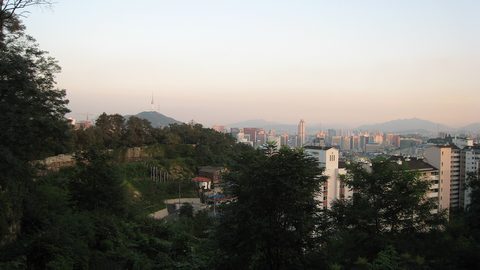
 South Korea Budget Stays Guesthouses Jjimjilbang Goshiwon and Love Motels Explained
A no-surprises guide to South Korea's cheapest beds, from sleeping on a jjimjilbang mat in Seoul to renting a tiny goshiwon room or a love motel by the night.
South Korea Budget Stays Guesthouses Jjimjilbang Goshiwon and Love Motels Explained
A no-surprises guide to South Korea's cheapest beds, from sleeping on a jjimjilbang mat in Seoul to renting a tiny goshiwon room or a love motel by the night.
-
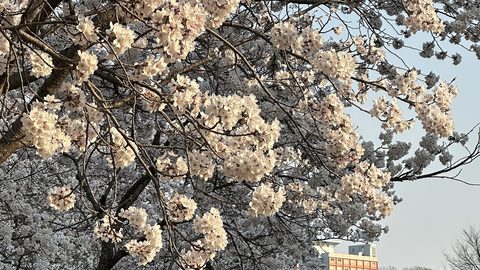 Best Time to Visit South Korea and the Two Peak Seasons That Double Your Costs
South Korea's two lunar calendar holidays, Seollal and Chuseok, can double your travel costs. Here is when to go instead for decent weather and budget-friendly prices.
Best Time to Visit South Korea and the Two Peak Seasons That Double Your Costs
South Korea's two lunar calendar holidays, Seollal and Chuseok, can double your travel costs. Here is when to go instead for decent weather and budget-friendly prices.
-
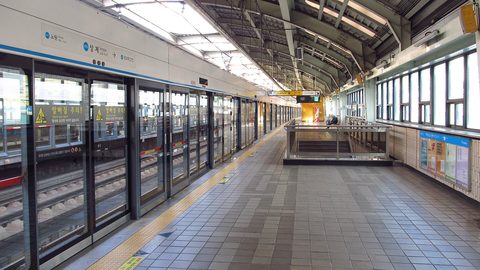 Getting Around South Korea With T-Money Cards KTX Trains and Intercity Buses
From tapping a T-money card on a Seoul city bus to navigating the Express Bus Terminal for a KTX ride, here is how South Korea's transport actually works.
Getting Around South Korea With T-Money Cards KTX Trains and Intercity Buses
From tapping a T-money card on a Seoul city bus to navigating the Express Bus Terminal for a KTX ride, here is how South Korea's transport actually works.
-
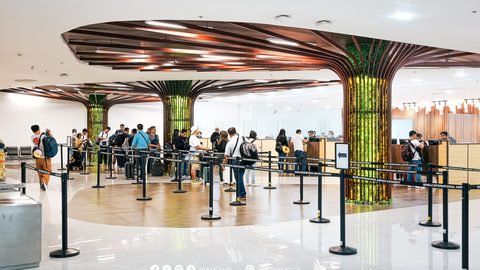 South Korea Entry Rules K-ETA Tourist Visas and What Southeast Asian Passports Need
A practical guide to South Korea's K-ETA system and tourist visa rules, with specific requirements for Philippine, Indonesian, Vietnamese, and other Southeast Asian passports.
South Korea Entry Rules K-ETA Tourist Visas and What Southeast Asian Passports Need
A practical guide to South Korea's K-ETA system and tourist visa rules, with specific requirements for Philippine, Indonesian, Vietnamese, and other Southeast Asian passports.
-
 Eating Cheaply in South Korea Halal Food in Seoul and Budget Street Food Finds
Where to eat on a tight budget in South Korea, plus a dedicated guide to finding halal Korean food, from Itaewon barbecue to Myeongdong street stalls.
Eating Cheaply in South Korea Halal Food in Seoul and Budget Street Food Finds
Where to eat on a tight budget in South Korea, plus a dedicated guide to finding halal Korean food, from Itaewon barbecue to Myeongdong street stalls.
-
 One Week in South Korea A Line by Line Cost Breakdown for Budget Travelers
A detailed line-by-line account of every won spent during one week in South Korea, from T-money card top-ups to jjigae in a Namdaemun alley.
One Week in South Korea A Line by Line Cost Breakdown for Budget Travelers
A detailed line-by-line account of every won spent during one week in South Korea, from T-money card top-ups to jjigae in a Namdaemun alley.
-
 Seoul
Seoul does not have to be expensive. A district-by-district guide to free attractions, cheap street eats near subway exits, and the palace days that cost nothing.
Seoul
Seoul does not have to be expensive. A district-by-district guide to free attractions, cheap street eats near subway exits, and the palace days that cost nothing.
-
 Busan
Take the night train from Seoul, wake up on Haeundae Beach, and do Busan on a budget. The cheap seafood markets, free viewpoints, and how to book that train.
Busan
Take the night train from Seoul, wake up on Haeundae Beach, and do Busan on a budget. The cheap seafood markets, free viewpoints, and how to book that train.
-
 Korea or Japan for a Cheap Trip The Honest Arithmetic Breakdown
A direct cost comparison of street food, transit passes, and budget beds to decide whether South Korea or Japan is cheaper for your next trip.
Korea or Japan for a Cheap Trip The Honest Arithmetic Breakdown
A direct cost comparison of street food, transit passes, and budget beds to decide whether South Korea or Japan is cheaper for your next trip.