South Korea on a Budget with Daily Costs and Hidden Travel Fees
Plan daily spending in Seoul and Busan with dated transport fares, clear room and meal allowances, mobile data comparisons, and hidden travel costs.
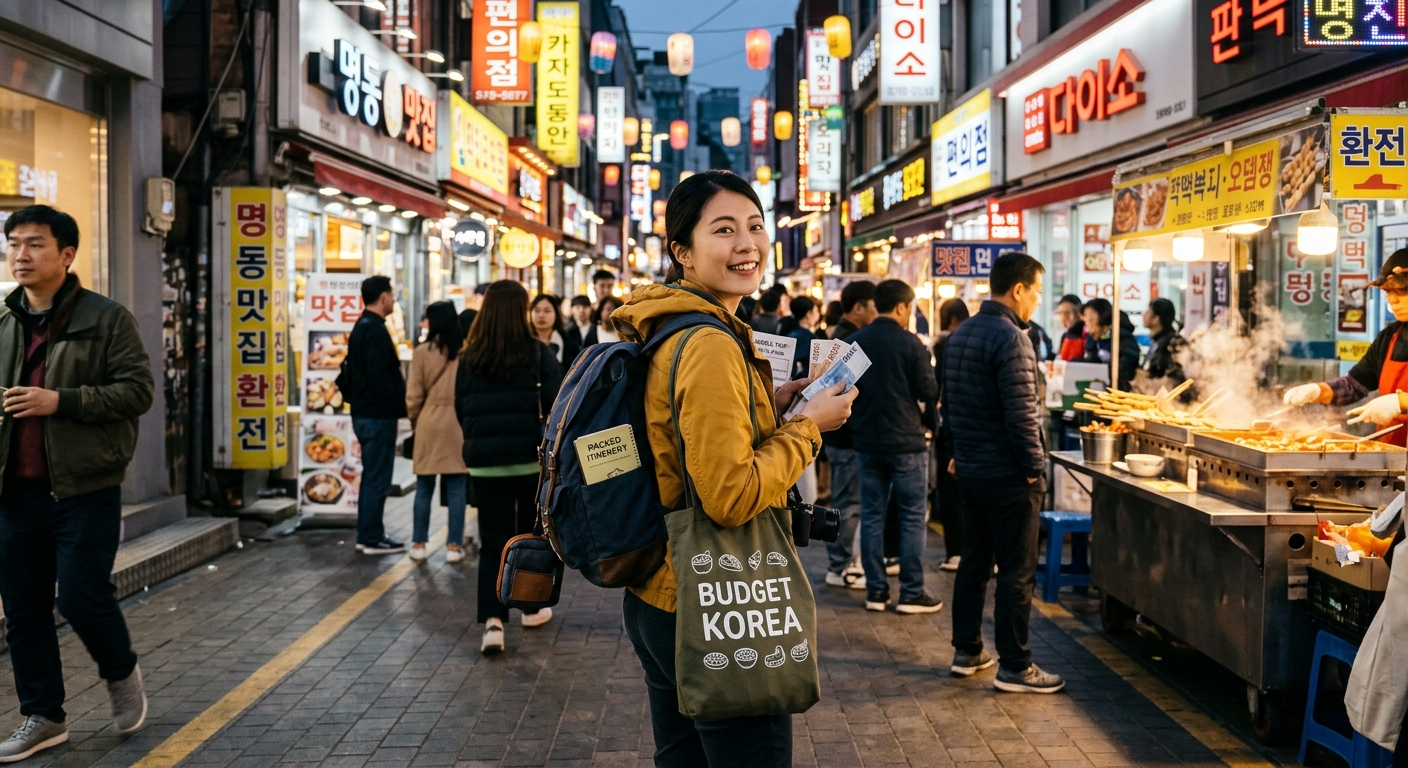
Your Korea budget can survive a bowl of noodles. An expensive room, an airport transfer you forgot, and several small payment fees are harder to absorb. For independent travelers visiting Seoul and Busan, the useful starting point is a daily spending plan with clear boundaries. Know what covers ordinary sightseeing days, what belongs in a separate trip fund, and which numbers still need a booking quote.
Build your daily budget first, then fund the travel days separately.
- Separate published transport fares from suggested spending allowances.
- Choose accommodation using the final checkout total and your actual dates.
- Add mobile data, airport travel, intercity tickets, and payment charges before calling the trip affordable.
What These Figures Mean Before You Book
Price check date: October 30, 2026. All monetary amounts below are in South Korean won, written as KRW. Published fares come from official transport sources. Accommodation, food, incidental spending, and mobile comparison examples are editorial planning assumptions prepared on that date. They are not verified hotel offers, restaurant menu prices, or mobile provider quotations.
This distinction matters. A suggested room allowance tells you what to search for. It does not promise that a suitable bed is available at that price. Replace each allowance with a dated checkout quote before booking. The calculations below show their inputs so you can adjust them without rebuilding the whole budget.
The daily models cover one adult, one accommodation night, three meals, and ordinary local transport. Flights, entry paperwork, insurance, airport transfers, travel between Seoul and Busan, shopping, alcohol, and paid attractions sit outside those totals. There is no currency conversion because your bank's exchange rate and fees will determine what you actually pay.
A Seoul Day Built Around KRW 64,200
For Seoul, use KRW 64,200 per person per day as a worked planning target. The October 30, 2026 editorial calculation is KRW 30,000 for accommodation, KRW 23,000 for meals, KRW 6,200 for local subway travel, and KRW 5,000 reserved for small incidental purchases.
Accommodation: Set a Search Ceiling
The KRW 30,000 accommodation allowance is a search target for a dorm bed or another basic arrangement. It is not a current room quote. Search Jongno or the wider Hongdae area, then compare the final nightly charge against access to your planned stops. Check bathroom arrangements, luggage storage, check-in hours, and whether bedding is included.
For a private room, budget from the full room price. If two travelers find a room quoted at KRW 80,000 per night, their accommodation share would be KRW 40,000 each. That is an illustrative calculation dated October 30, 2026, not an advertised property rate. A solo traveler would carry the entire room charge.
Meals: Give Lunch and Dinner Enough Room
The Seoul food allowance uses editorial targets of KRW 5,000 for breakfast, KRW 9,000 for lunch, and KRW 9,000 for dinner, totaling KRW 23,000. These October 30, 2026 assumptions support a simple breakfast and modest meals selected after checking displayed menus. They are not claims that every restaurant offers those prices.
Look for meals with a clearly stated individual portion. Kimbap, rice dishes, and noodle shops are useful places to compare menus. Check whether a barbecue price is per person, per serving, or subject to a minimum order. Snacks do not replace a meal budget if you still buy dinner afterward.
Local Transport: Count Separate Journeys
Seoul's official subway fares, checked October 30, 2026, list an adult transport-card base fare of KRW 1,550, effective June 28, 2025. Four separate base-fare journeys therefore cost KRW 6,200. Longer journeys and services with separate charges can cost more.
For an efficient sightseeing day, group Jongno, Insadong, and nearby central sights instead of repeatedly crossing the city. The point is to reduce paid journeys and travel time. Your transport allowance should follow the route you intend to take.
A Busan Day Built Around KRW 59,400
The Busan model comes to KRW 59,400 per person per day. Its October 30, 2026 editorial inputs are KRW 25,000 for accommodation, KRW 23,000 for food, KRW 6,400 for subway journeys, and KRW 5,000 for incidental spending. The lower accommodation target is a planning choice, not evidence that Busan rooms always cost less.
Compare Seomyeon for an itinerary spread across the city, Nampo for a schedule focused on the older central districts, and Haeundae if the beach is your main priority. Check the walking route from the station to the property. A low room price loses some appeal when you need extra transport with luggage.
The food allowance uses the same breakfast, lunch, and dinner targets as Seoul. For local meals, compare displayed prices for pork soup with rice, wheat noodles, or other individual dishes. At seafood venues, confirm whether preparation, seating, and side dishes are included before agreeing to an order. Do not assume a market setting guarantees a smaller bill.
Official metro fares, checked October 30, 2026, list adult transport-card fares of KRW 1,600 for section one and KRW 1,800 for section two. The page does not state an effective date. Four section-one journeys produce the model's KRW 6,400 allowance. Four section-two journeys would instead cost KRW 7,200, calculated from those published fares.
Compare Mobile Data by the Whole Trip Cost
Mobile data belongs in the trip budget, even when a seller advertises a daily price. Compare options over the same travel dates, with enough data for your expected use. Include taxes, required top-ups, delivery or collection charges, and any cost of extending validity.
The following examples are hypothetical comparison inputs prepared October 30, 2026. They explain the arithmetic and are not live offers from any provider.
- Prepaid eSIM: An assumed KRW 25,000 package covering the entire seven-day trip totals KRW 25,000 if no extra purchase is needed.
- Physical tourist SIM: An assumed KRW 30,000 package plus an assumed KRW 3,000 delivery charge totals KRW 33,000.
- Home-network roaming: An assumed KRW 8,000 daily charge over seven billed days totals KRW 56,000. Check how the operator defines a billing day.
- Shared pocket Wi-Fi: An assumed KRW 5,000 daily rental over seven billed days totals KRW 35,000. Split between two travelers, that is KRW 17,500 each before any additional charges.
You can also check get eSIM while gathering quotes. Verify Korea coverage, compatibility with your exact device model, carrier lock status, and plan terms before buying. No Korea-specific price, network partner, or coverage promise is assumed here.
Compare data allowances as carefully as prices. Check hotspot permission, speed restrictions, activation rules, expiry time, refund conditions, and whether calls or a local number are included. A shared router also means the travelers using it need to stay close enough to connect.
The Small Charges That Distort a Cheap Day
A reserve helps, but known expenses should have their own lines. The daily incidental allowance above is not a substitute for pricing an airport journey or an intercity ticket.
- Single-journey premiums: Seoul's cited fare schedule lists KRW 1,650 for an adult single ride, KRW 100 above its card base fare. Busan's cited schedule lists QR tickets at KRW 1,700 and KRW 1,900, also KRW 100 above the corresponding card fares. These figures were checked October 30, 2026.
- Transport card purchase: Separate the cost of obtaining a card from the travel balance loaded onto it. Get the current purchase price before adding it to your budget.
- Airport and intercity travel: Price your exact airport route and Seoul to Busan service separately. Ordinary city transport allowances do not cover these journeys.
- Accommodation extras: Inspect the checkout total for taxes and compulsory charges. Ask about towels, lockers, luggage storage, and late arrival arrangements before paying.
- Cash and card charges: Check both your bank's terms and the ATM screen. Compare currency conversion choices before accepting a transaction.
- Entry paperwork: Confirm requirements for your passport, travel purpose, and departure date. Include any applicable application, processing, document, or service charges.
- Laundry and storage: Check washing, drying, and locker charges locally. These depend on the facility, luggage size, and rental period.
A transport-card top-up is prepaid spending, not an extra fare on top of journeys already counted. Avoid recording both the full top-up and every ride as separate expenses. Track the remaining balance, especially before leaving Korea.
Turn Daily Allowances Into a Trip Fund
For a worked example, assign four daily budget units to Seoul and three to Busan. Using the models above, four times KRW 64,200 equals KRW 256,800. Three times KRW 59,400 equals KRW 178,200. The combined baseline is KRW 435,000. This is an editorial calculation dated October 30, 2026.
These are seven daily units with seven accommodation nights. A seven-day trip with fewer overnight stays needs an adjusted accommodation calculation. Arrival and departure times also affect how many meals and local journeys you need.
Add your actual mobile quote, airport transfers, intercity ticket, entry costs, insurance, and planned admissions. Then add a separate contingency. Keeping these items visible makes it easier to see whether a cheaper flight arriving late creates extra ground transport or accommodation costs.
Keep the Budget Useful Until Departure
Start with the two city models, then replace assumptions with confirmed prices. Save the room's final checkout screen, check menus before ordering, and use your planned routes to estimate transport. Date each quote so an old screenshot does not become a false promise.
Your final daily figure may be higher or lower than these examples. What matters is that it reflects your sleeping arrangements, appetite, route, and actual bookings. A clear Seoul and Busan budget leaves fewer costs waiting to surprise you after arrival.
Read next
-
 Budget Flights to South Korea Which Airlines to Book and What to Expect
Compare Scoot, AirAsia X, Jeju Air, Jin Air, and T'way fares from Southeast Asia to Seoul. Real all-in costs, baggage fees, and timing tips.
-
 Cheap Data in South Korea — SIM Cards, eSIMs, and Pocket WiFi Compared
Airport SIM cards, eSIMs, and pocket WiFi rentals compared for South Korea travel. Real 2025 prices and per-day cost by trip length.
-
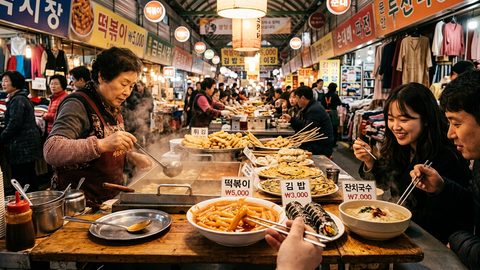 Eating at South Korea's Traditional Markets on Less Than 10,000 Won
Eat well at South Korea's best traditional markets for under 10,000 won. Real dish prices from Gwangjang, Gukje, and Jeonju's Nambu Market.