Eating at South Korea's Traditional Markets on Less Than 10,000 Won
Eat well at South Korea's best traditional markets for under 10,000 won. Real dish prices from Gwangjang, Gukje, and Jeonju's Nambu Market.
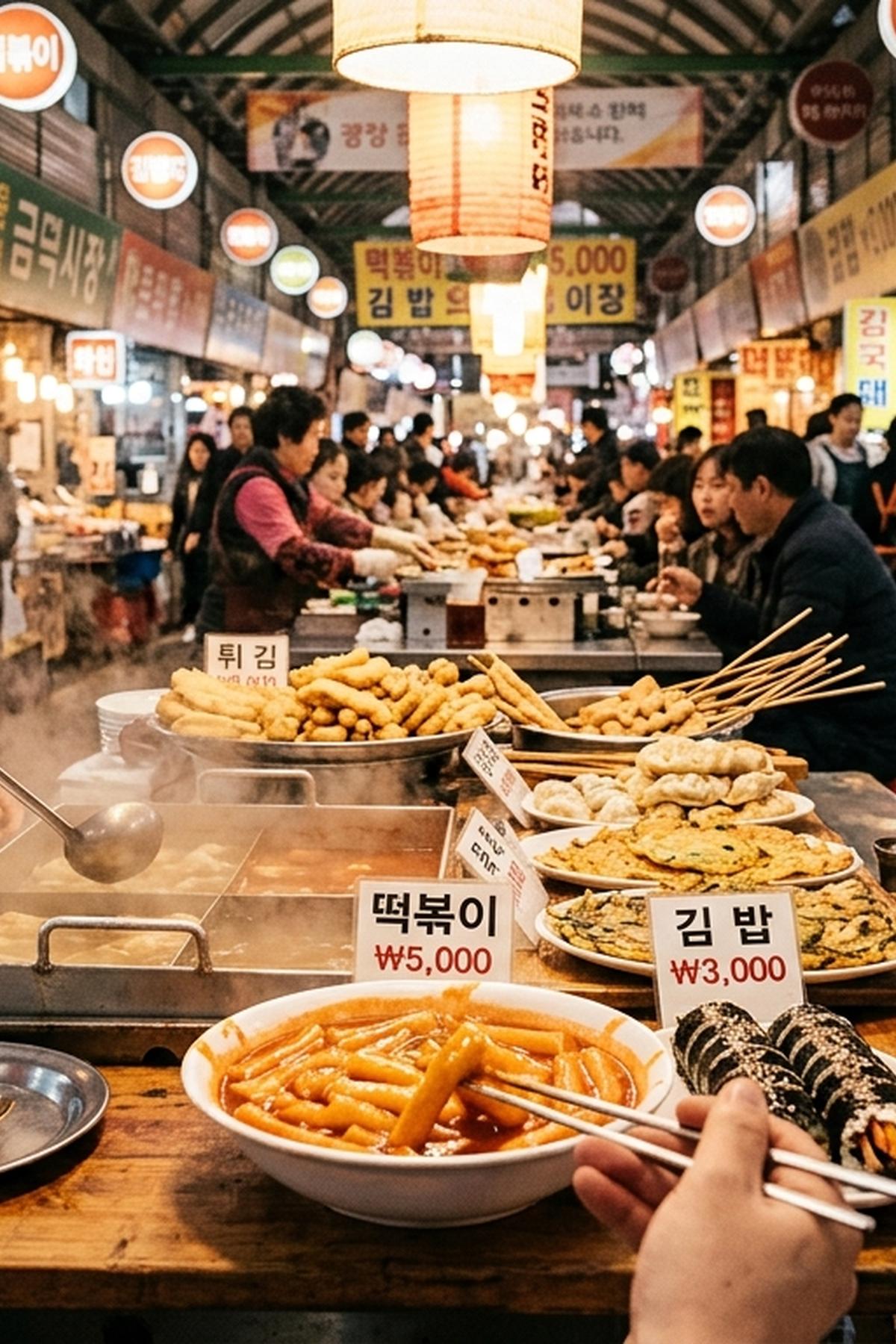
The smell hits you before the stalls do. Sizzling mung bean batter, broth bubbling in large pots over gas burners, the sharp sweetness of hotteok pressing flat on a heated iron. South Korea's traditional markets have been feeding locals on tight budgets for generations. They are not tourist recreations dressed up for foot traffic. They are active food institutions, and a full market meal in Seoul, Busan, or Jeonju can still come in well under 10,000 won if you know which stalls to target and in what order.
Market Meal Essentials
- Most single market dishes across Seoul, Busan, and Jeonju cost between 1,000 and 5,000 won per serving
- A two-to-three dish market meal averages 6,500 to 9,000 won at the markets covered here
- Gwangjang in Seoul, Gukje in Busan, and Nambu in Jeonju are the three strongest anchors for budget eating
- Cash in small notes is essential at most traditional stalls, as card readers are still far from universal
- Researching market costs before your trip prevents wasted transit time on a detour that does not fit your daily budget
What 10,000 Won Actually Gets You at a Korean Market
The 10,000 won ceiling in the title is not aspirational. It is achievable, but only if you understand how traditional market eating works. You are not sitting down at a restaurant and ordering a set menu. You are buying single-item portions from stalls that specialize in one or two things. A bindaetteok stall makes mung bean pancakes and nothing else. A gimbap halmeoni rolls rice and fillings all day. A noodle vendor does kalguksu or japchae and keeps moving. This specialization is what keeps prices low. You graze through the market in stages, and each individual item rarely breaks 5,000 won.
Portion sizes vary by vendor, but the general rule at most Korean traditional markets is that both snack-sized and full-sized portions exist. You can try bindaetteok for 1,000 to 1,500 won per piece at Gwangjang, or pay 3,000 won for a small plate of mayak gimbap. Either way, 10,000 won leaves you with several choices and a full stomach. The challenge is not finding food under budget. The challenge is choosing what to skip.
The Seoul Markets Worth Planning Around
Gwangjang Market, Jongno
Gwangjang Market opened in 1905, which gives it the distinction of being Korea's first permanent traditional market. The food section sits inside Building 2 and runs along covered alleyways lined with vendors serving bindaetteok, japchae, and mayak gimbap. For a budget visit, skip the yukhoe (raw beef), which sits at 10,000 to 15,000 won depending on the vendor. Focus instead on bindaetteok at 1,000 to 2,000 won per piece and mayak gimbap at 3,000 won for a generous plate. Three pieces of bindaetteok plus a plate of mayak gimbap runs 6,000 to 7,000 won total. Take Line 1 or Line 5 to Jongno 5-ga Station and the market is a two-minute walk from Exit 8.
Namdaemun Market, Jung-gu
Namdaemun is one of Seoul's largest outdoor markets and it spreads across several blocks near City Hall. The food section near Gate 4 is where the budget eating happens. Hotteok, the thick pancake filled with brown sugar and cinnamon, costs 1,000 won per piece. A bowl of kalguksu at the communal-table stalls inside the covered section runs 5,000 to 6,000 won. One hotteok and a bowl of kalguksu puts your total at 6,000 to 7,000 won with change from 10,000 won. This is a stronger lunch market than dinner. Most food stalls close by mid-afternoon, so arriving before noon gives you the best selection.
Tongin Market, Seochon
Tongin Market sits in the Seochon neighborhood west of Gyeongbokgung Palace and runs a coin-lunch system that is one of the most structured budget eating experiences in Seoul. You exchange 5,000 won for ten brass yeopjeon coins at the market exchange counter, then use those coins to fill a small dosirak lunch tray from participating vendors inside. Each item costs one to two coins. For 5,000 won you can load a tray with tteokbokki, bindaetteok, japchae, and a small piece of jorim braised fish. The coin format removes any ambiguity about your total spend before you start, which makes it particularly useful when you are managing a strict daily budget.
Busan's Markets Run Leaner Than the City's Reputation
Gukje Market and Bupyeong Kkangtong Alley, Jung-gu
Gukje Market in Busan's Jung-gu district is large and easy to get turned around inside. The lower-cost food options cluster around the Bupyeong Kkangtong Market alley that runs alongside it. Vendors in this covered alley sell soondaeguk (sundae soup with blood sausage and vegetables) at 5,000 to 6,000 won per bowl and tteokbokki at 2,500 to 3,000 won per serving. A bowl of soondaeguk and one serving of tteokbokki puts your total at 7,500 to 9,000 won. The alley is covered, which also makes it a reasonable wet-weather option in Busan when afternoon rain hits unexpectedly.
The Street Food Stretch Near Jagalchi Station
Jagalchi is best known for its fish market, but the street food stalls along the pedestrian lanes near Exit 10 of Jagalchi Station serve a different purpose. Eomuk fish cake skewers run 500 to 1,000 won each. Twigim (battered and fried squid, vegetables, and rice cake) sells for 500 won per piece. Hotteok here is 1,000 won. Three to four items from this stretch costs under 4,000 won, which leaves enough budget for a bowl of gukbap at a pojangmacha tent nearby for 5,000 to 6,000 won. This is not a standalone market destination. It works best as the second stop on a Busan market day, after your main meal at Gukje.
Jeonju's Nambu Market Packs Serious Flavor per Won
Jeonju Nambu Market sits in the centre of the Hanok Village area and operates daily as a traditional wet and dry goods market with a food corridor along the main hall. Savory jeon pancakes, haemul pajeon and kimchi jeon, cost 3,000 to 5,000 won per plate depending on size and vendor. Injeolmi, the glutinous rice cakes pressed in roasted soybean powder, can be found for 2,000 won for a small paper bag. A jeon plate, injeolmi, and a cup of sikhye sweet rice drink puts you at 6,000 to 8,000 won. The night market version of Nambu runs on Fridays and Saturdays and draws larger crowds. Prices on those evenings tend to drift 500 to 1,000 won higher than the daytime market, so a weekday lunch visit is the cleaner call for a tight budget.
Deciding Which Market to Visit Before You Commit to the Journey
Each market in this article is worth visiting on its own terms, but your city day is finite. Transport time, queue length at popular stalls, and the physical layout of each market all affect whether a detour is practical. The three Seoul markets above sit in three separate neighborhoods spread across the city. Visiting all three in one day is possible but exhausting. In Busan, Gukje and the Jagalchi street food area are close enough to combine into a single half-day on foot from Jung-gu.
Before committing to any journey, use a cheapest market finder to compare average food costs across markets before you travel. This is particularly useful if you are moving between Seoul, Busan, and Jeonju and want to know in advance which city gives you the better deal on specific dishes. It turns a vague sense of "which market is cheaper" into a concrete number you can compare against your daily budget.
Here is a practical order for building a market meal day without guessing:
- Check market opening hours the night before. Namdaemun and Tongin close by early to mid-afternoon. Gwangjang runs into the evening. Nambu in Jeonju has daytime hours daily and a night market on weekends. Arriving at a market that has already closed is a common and avoidable mistake.
- Walk the full market before buying anything. Prices for identical dishes can vary by 500 to 1,000 won between vendors in the same covered hall. One full pass lets you find the better price before spending.
- Choose your highest-cost anchor dish first. This is usually your soup, noodle bowl, or pancake plate, typically priced at 4,000 to 6,000 won. Lock that in before deciding what snacks to add.
- Fill remaining budget with snack items. Hotteok, fish cake skewers, injeolmi, and small gimbap rolls are the gap-fillers that round out a market meal without pushing you over 10,000 won.
- Buy drinks from a convenience store near the exit. Market-side drinks are sometimes marked up compared to the CU or GS25 that sits within a minute of every major traditional market. This saves 500 to 1,000 won per person.
What Each City Actually Costs for a Day of Market Eating
In Seoul, Gwangjang is the most consistent market for eating well within budget. A bindaetteok and mayak gimbap meal runs 6,000 to 7,000 won, and adding a snack or drink keeps you under 10,000 won. Namdaemun and Tongin both deliver similar totals through different dish combinations. Across all three Seoul markets, you can budget 7,000 to 9,000 won for a satisfying meal and feel confident in that number.
In Busan, the Gukje and Bupyeong Kkangtong corridor is the strongest value, with a soup and tteokbokki combination landing at 7,500 to 8,500 won. Adding the Jagalchi street food stretch as a snack stop brings your combined spend to around 8,000 to 9,500 won for a half-day of eating. Busan runs slightly cheaper than Seoul on comparable dishes, which gives you a small but real buffer if you want to try more than three items.
In Jeonju, a proper market meal at Nambu costs a little more than Seoul's snack-format options because the portions lean toward full-meal sizes. Budget 8,000 to 10,000 won for a satisfying daytime visit. A weekday trip stays at the lower end of that range. Weekend nights at Nambu push toward or past the 10,000 won ceiling for a full meal, making the daytime visit the right call if you are working from a strict number.
Markets Feed the City, and They Can Feed Your Budget Too
Traditional markets are not holding on out of nostalgia. In Seoul, Busan, and Jeonju, they are active food ecosystems that local residents rely on every day. The vendors are not pricing for tourists. They are pricing to keep the regulars coming back. That is the real reason the math works in your favor at a traditional Korean market. You are not getting a tourist discount. You are paying the same price everyone else pays. That distinction is what makes the 10,000 won target feel genuinely achievable rather than an optimistic number lifted from a guidebook. Show up hungry, carry cash, and the budget holds.