A Backpacker’s Guide to Cheap Jeju Island Travel
Navigate Jeju Island cheaply using the public express bus network and budget flights instead of renting an expensive car.
- Flag
-

- ISO code
- KR
- Population
- 488,844
- Currency
- KRW
- Timezone
- Asia/Seoul
Jeju Island by Bus: ₩1,200 Rides and Coastal Walks
The bus pulls away from Jeju City Intercity Bus Terminal and the first thing you notice is the sea light. You paid ₩1,200 in cash and you already have a seat. That is the moment the car anxiety should evaporate. Jeju Island has a reputation for being nearly impossible without a rental vehicle. That reputation is wrong. It is based on outdated information and a habit of comparing Jeju to cities with subways. The bus network here is thorough, cheap, and purpose built for reaching the volcanic cones, coastal walks, and trailheads that make this island worth the flight. You just need to know which bus to take and when.
The central question for any budget traveller arriving without a licence is whether you can travel Jeju cheaply without a car. The answer is yes, with caveats. You will trade speed for cost. You will need to plan around bus schedules instead of driving on impulse. What you gain is a trip that costs less than ₩50,000 for transport across a full week and a rhythm that forces you to slow down and walk the coastline rather than rush past it. Let’s make it work.


Getting There: Flights Over the Ferry
Jeju Air, Jin Air, T’way, Air Busan, and Korean Air all fly from Seoul Gimpo to Jeju. The route carried 13,560,000 passengers in 2023. OAG ranked it the world’s busiest domestic route. A flight takes 65 to 70 minutes. The one way fare ranges from ₩20,000 to ₩120,000. The cheapest booking window is 6 to 8 weeks before departure. This is the only way to arrive. Skip the ferry. The ferry from Busan takes over 11 hours, costs more than a budget flight, and arrives at a port that is inconveniently far from Jeju City’s bus station. The ferry makes sense only if you are bringing a car, which you are not, so book the flight.
Set a price alert on Jeju Air and Jin Air for your dates. When you see a one way fare under ₩40,000, buy it. Do not wait for ₩20,000. Those seats exist but they vanish within moments of release. Budget for ₩50,000 each way and consider anything less a win. Arrive at Gimpo 90 minutes before departure. The security line for domestic flights is short but the gate can be a walk.
The Bus Network: Red, Blue, and Green
The Jeju Special Self Governing Province runs the bus system. There are three types. Express buses are red. They run long distances on main roads with few stops. Trunk buses are blue. They connect towns and major tourist zones with more stops than express routes. Branch buses are green. They feed into the trunk and express lines and reach smaller villages, trailheads, and coastal paths.
Express Route 101: Jeju City to Seogwipo
This is the bus you take when you are moving between the island’s two main cities. Route 101 runs from Jeju City Intercity Bus Terminal to Seogwipo via the south coast. The ride takes about 80 minutes. The fare with a T money card is ₩1,850 to ₩2,850 depending on distance. Paying cash costs ₩2,000 to ₩3,000. Carry exact change. The driver gives no change. Buy a T money card at any convenience store. Load it with enough to cover multiple inter city trips and all your local travel.
Trunk Route 202: West Coast Attractions
Route 202 runs from Jeju City to Seogwipo via the west coast. It is slower than the 101 but it passes through Hallim Park, Hyeopjae Beach, and the O’Sulloc Tea Museum. If you are heading to the west coast attractions this is your line. The fare works the same as the express lines. T money is cheaper than cash.
Coastal Buses and Key Stops
Branch buses run along the coastal roads and stop at trailheads for the Olle trails and the Hallasan non summit hikes. Route 700 runs the full east coast loop from Jeju City past Seongsan Ilchulbong to Seogwipo. It takes about two hours and costs under ₩3,000. Hop off at Seongsan Ilchulbong, hike the crater, and catch the next bus heading south. Buses run every 20 to 40 minutes on major routes. The frequency drops on branch lines. Check the Jeju Bus Information app for real time arrivals.
Free and Cheap Sights Reachable by Bus
Jeju’s best attractions cost very little or nothing. The price of admission proves that the island was not designed exclusively for package tourists.
Seongsan Ilchulbong
UNESCO listed Sunrise Peak is a 182 meter volcanic tuff cone. The admission fee in 2025 was ₩2,000 for an individual. A group of ten or more pays ₩1,600 each. Open 07:00 to 20:00 in summer and 07:30 to 19:00 in winter. Take bus 700 from Jeju City Intercity Bus Terminal. It drops you about 500 meters from the entrance. Arrive by 08:30 to beat the package tour crowds. The hike up the stairway takes 20 to 25 minutes. The view is identical to the expensive helicopter tour. Skip the helicopter.
Hallasan Non Summit Trails
You can hike Hallasan without a summit reservation. The non summit trails are Eorimok (4.7 km), Yeongsil (3.7 km), and Donnaeko (7 km). No reservation is required. The summit trails Seongpanak and Gwaneumsa cap daily visitors and require a free reservation released one month in advance at 09:00 KST. The non summit trails give you the same volcanic landscape and the same views of the crater rim above the tree line for free. Take a bus from Jeju City to the Eorimok trailhead or to the Yeongsil trailhead. Bring water and snacks. There are no shops on the trail.
Olle Trails
27 routes covering 437 km. Route 7 starts in Seogwipo, runs 13.8 km along the coast and over an oreum, and ends near the sea. The Jeju Olle Foundation sells a passport for ₩20,000 that you stamp at the start, midpoint, and end of each route. The passport is a souvenir, not a requirement. You can walk any section for free. The coastal walks are where Jeju reveals itself. You get cliffs, basalt shorelines, and the sound of the sea without a ticket or a queue. Take a branch bus to the nearest trailhead marked on the Jeju Olle map and walk until you are tired. Then catch the next bus back.
Seafood Markets
Dongmun Market in Jeju City is the main seafood market. Arrive before 10:00 for the freshest catch. A bowl of hoe (raw fish) with banchan costs about ₩10,000 to ₩15,000. Grilled mackerel and a bowl of rice runs around ₩8,000. You do not need a restaurant reservation. Walk the aisles, point at what looks good, and eat standing at one of the shared tables. The market is a short walk from Jeju City Intercity Bus Terminal. The best budget meal on the island is here.

.jpg)
| Bus Type | Cash Fare | T Money Card Fare |
|---|---|---|
| Within City (Green or Blue) | ₩1,200 | ₩1,150 |
| Inter City Express (Red, e.g. 101) | ₩2,000 ₩3,000 | ₩1,850 ₩2,850 |
| Coastal Trunk (Blue, e.g. 202) | ₩2,000 ₩3,000 | ₩1,850 ₩2,850 |
| East Coast Loop (700) | ₩3,000 | ₩2,850 |
Budget Accommodation Without a Car
The guesthouse dormitory bed in Jeju City costs ₩15,000 to ₩25,000 per night in 2025. That is the cheapest option. The dormitories cluster around the bus terminal and the airport area. You walk everywhere. No ride share needed. A minbak room in a coastal area costs ₩30,000 to ₩50,000. These are family run guesthouses with private rooms and a small kitchen. If you are Muslim and need to self cater, book a minbak with the kitchen filter on Booking.com. Bring halal certified meat from Seoul. E mart Yongsan has a KMF certified halal section. There is no halal certified restaurant on Jeju. The Korea Muslim Federation database lists zero certified restaurants for 2025. Three restaurants self declare as Muslim friendly: Makan Halal Korean Restaurant in Jeju City, Bagdad Café in Jeju City, and Halal Korean Food in Seogwipo. None hold KMF certification. The Jeju Islamic Center in Nohyeong dong has a musalla but no KMF certification. There is no permanent prayer facility in Seogwipo.
Honest Caveat
This approach works only if you accept the trade off. You will not visit all 27 Olle trails. You will not catch sunrise at Seongsan Ilchulbong unless you are willing to leave Jeju City by bus at 05:00. You will miss the isolated beaches that require a long walk from the nearest bus stop. The bus network covers the major sights but it rewards patience over efficiency. The people who love Jeju without a car are the people who planned one hike per day and let the bus schedule decide the rest. The people who hate it are the people who tried to see the whole island in three days. Pick your pace. Spend the money you saved on a second bowl of hoe at Dongmun Market.
Common Questions
Can I get from Jeju Airport to Jeju City centre by bus?
Yes. Take bus 100, 200, or 300 from the bus stop outside arrivals. They run every 10 to 15 minutes. The fare with a T money card is ₩1,150. The ride to the central bus terminal takes about 20 minutes.
Is it possible to see Seongsan Ilchulbong and return to Jeju City in one day by bus?
Yes. Take bus 700 from Jeju City Intercity Bus Terminal. The one way trip is about 90 minutes. Allow two hours for the hike and the crater walk. Return by the same bus. The total cost is under ₩6,000 for both fares.
Do I need a T money card or can I pay cash for every bus?
You can pay cash but the fare is higher and the driver does not give change. Buy a T money card at any GS25 or CU convenience store for ₩2,500 and load it with at least ₩15,000. That covers all your bus travel for a four day trip.
What is the cheapest accommodation that still lets me cook my own food?
A minbak with a kitchenette costs ₩30,000 to ₩50,000 per night in coastal areas. Filter by kitchen on Booking.com or Agoda. A dorm bed in a guesthouse in Jeju City costs ₩15,000 to ₩25,000 but shared kitchens are common. Lotte Mart Jeju in Nohyeong dong sells limited halal certified frozen items. Check the KMF logo on the packaging.
Can I hike to the summit of Hallasan without a rental car?
Yes. Take bus 110 or 240 from Jeju City Intercity Bus Terminal to the trailheads. The summit trails Seongpanak and Gwaneumsa require a free reservation made one month in advance. The non summit trails require no reservation. The bus drops you within 200 meters of each trail entrance.
Read next
-
 Getting Around Jeju by Bus The Intercity Network That Works Better Than a Rental Car
Use the red express buses from Jeju City Bus Terminal to reach Seogwipo and the coasts without a rental car, saving money with the T-money card and real-time arrival apps.
Getting Around Jeju by Bus The Intercity Network That Works Better Than a Rental Car
Use the red express buses from Jeju City Bus Terminal to reach Seogwipo and the coasts without a rental car, saving money with the T-money card and real-time arrival apps.
-
 South Korea on a Backpacker Budget What It Really Costs and Where the Cash Goes
A realistic breakdown of what a budget trip to South Korea costs, from Seoul street food to intercity transport, so you can plan without nasty surprises.
South Korea on a Backpacker Budget What It Really Costs and Where the Cash Goes
A realistic breakdown of what a budget trip to South Korea costs, from Seoul street food to intercity transport, so you can plan without nasty surprises.
-
 Praying in South Korea Seoul Mosques Musallas and What Muslim Travelers Should Expect
A practical guide to mosques, musallas, and prayer rooms in Seoul and beyond, including the Itaewon Central Mosque, Incheon Airport facilities, and what to expect for Jummah.
Praying in South Korea Seoul Mosques Musallas and What Muslim Travelers Should Expect
A practical guide to mosques, musallas, and prayer rooms in Seoul and beyond, including the Itaewon Central Mosque, Incheon Airport facilities, and what to expect for Jummah.
-
 Getting By in Seoul Without Speaking Korean What Actually Works
You do not need Korean to travel Seoul, but one hour with Hangul and the right app changes everything. Here is what actually works on the ground.
Getting By in Seoul Without Speaking Korean What Actually Works
You do not need Korean to travel Seoul, but one hour with Hangul and the right app changes everything. Here is what actually works on the ground.
-
 Seoul SIM Card eSIM and Pocket WiFi Prices Compared Honestly
A straight price comparison of SIM cards, eSIMs and pocket wifi for Seoul, with the real pickup costs at Incheon Airport and which option wastes your money.
Seoul SIM Card eSIM and Pocket WiFi Prices Compared Honestly
A straight price comparison of SIM cards, eSIMs and pocket wifi for Seoul, with the real pickup costs at Incheon Airport and which option wastes your money.
-
 Budget Flights to South Korea Which Airlines to Book and What to Expect
Compare Scoot, AirAsia X, Jeju Air, Jin Air, and T'way fares from Southeast Asia to Seoul. Real all-in costs, baggage fees, and timing tips.
Budget Flights to South Korea Which Airlines to Book and What to Expect
Compare Scoot, AirAsia X, Jeju Air, Jin Air, and T'way fares from Southeast Asia to Seoul. Real all-in costs, baggage fees, and timing tips.
-
 Cheap Data in South Korea — SIM Cards, eSIMs, and Pocket WiFi Compared
Airport SIM cards, eSIMs, and pocket WiFi rentals compared for South Korea travel. Real 2025 prices and per-day cost by trip length.
Cheap Data in South Korea — SIM Cards, eSIMs, and Pocket WiFi Compared
Airport SIM cards, eSIMs, and pocket WiFi rentals compared for South Korea travel. Real 2025 prices and per-day cost by trip length.
-
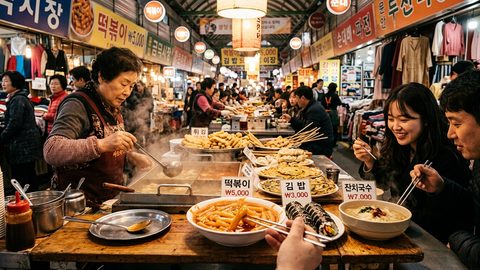 Eating at South Korea's Traditional Markets on Less Than 10,000 Won
Eat well at South Korea's best traditional markets for under 10,000 won. Real dish prices from Gwangjang, Gukje, and Jeonju's Nambu Market.
Eating at South Korea's Traditional Markets on Less Than 10,000 Won
Eat well at South Korea's best traditional markets for under 10,000 won. Real dish prices from Gwangjang, Gukje, and Jeonju's Nambu Market.