How to Navigate Seoul When You Only Speak English
You do not need Korean to travel Seoul, but one hour with Hangul and the right app changes everything. Here is what actually works on the ground.


Surviving Seoul Without Speaking Korean: What Actually Works
The common assumption is that Seoul is hard without Korean. That is wrong. The city has 100% bilingual signage on every subway station, bus stop, and street name sign. The real problem is not navigation. The real problem is ordering food from a restaurant with no English menu and trying to get a taxi driver to understand where you want to go. These two situations will decide whether your trip feels smooth or exhausting.
You do not need to learn Korean. You need to learn Hangul, and that takes about one to two hours. King Sejong the Great invented this alphabet in 1443, and it is a featural alphabet with 14 basic consonants and 10 basic vowels. The sounds map directly to letters. Once you sound out a word, you can say it passably. That is the entire skill required. Three phrases then do the rest of the work.
The One Hour That Changes Everything: Hangul Sound to Sign Mapping
Spend the flight learning how 14 consonants and 10 vowels combine into blocks. That is it. Hangul is not Chinese characters. Each block is a syllable, and each letter inside that block tells you exactly how to pronounce it. After one hour of practice you can read every subway station name out loud. You will not understand the meaning, but you will be able to match the sound of the Hangul on the wall to the sound of the station announcement. That stops you from missing your stop.
Do this with a free app or a YouTube video titled "Learn to Read Hangul in 60 Minutes". The phonetic consistency means you are not guessing. You are decoding. When you see a restaurant sign that reads "김밥천국", you sound it out as "gimbap cheonguk" and you know it is a gimbap chain. No translation app is faster than your own eyes for that task.
The Three Phrases That Change How Locals Treat You
Your Opening Move
Say any of these three and the person you are talking to visibly relaxes. They stop expecting a tourist who will gesture and shout. They start trying to help.
Annyeonghaseyo (안녕하세요) means hello. Use it when you walk into any shop, restaurant, or convenience store. It costs nothing and it resets the interaction to polite mode.
Ordering Without Grammar
Igeo juseyo (이거 주세요) means "this one, please." Point at a menu item or a shelf item, say this phrase. You have just ordered food without a single word of Korean grammar. Pair it with a finger on a picture or a dish in a glass case.
Closing The Exchange
Gamsahamnida (감사합니다) means thank you. Say it when you receive your food, when you get change, when someone holds a door. It is the closing signal that says you are not a rude foreigner. Locals will respond with a nod or a smile, and that small exchange changes the temperature of every transaction.
That is the entire phrase list you need before you arrive. Add "eolmayeyo" (how much is it) if you are shopping at a market where prices are not marked. Add "hwajangsil eodiyeyo" (where is the bathroom) for emergencies. But the three above cover 80% of daily interactions.
Papago vs Google Translate: Brutally Honest Comparison in Seoul Street Conditions
Papago wins. It is not close. Naver Corporation developed Papago, and its Korean to English BLEU score in 2023 was 34.8 against Google Translate's 28.1. That gap matters when you are translating a handwritten menu or a sign with smudged characters. Papago understands colloquial Korean better, and it handles the verb endings that change politeness levels. Google Translate often produces grammatically correct but weirdly formal sentences that confuse locals.
Both apps offer image translation through the camera. You hold your phone over a menu and the app overlays the translation. Papago's camera translation is more reliable on Korean text because it was trained on domestic data. Google Translate sometimes misreads Hangul vowel combinations, especially in low light inside basement restaurants.
Both apps work offline if you download the language pack before you leave. Do that at home on Wi Fi. When you are in a subway tunnel with no signal, offline mode is the difference between eating and standing on the street hungry.
Why Your Phone Map Almost Certainly Fails and What to Install Instead
Google Maps does not work for turn by turn navigation, driving, or public transit directions in South Korea. The South Korean government restricts the export of domestic mapping data to foreign servers. That is not a glitch. It is a regulation. Google Maps can show you a rough walking route, but the routing uses limited data and it will not tell you which subway exit to take or which bus number to catch.
Install Before You Land
Install Naver Map or Kakao Map before you land. Both are free and both support English, Chinese, and Japanese interfaces. Naver Map is the more popular choice among English speaking travellers. It shows real time public transit information, including bus arrival times. Kakao Map is a close second with the same functionality. Download either one and test it on your home Wi Fi so it caches map tiles. When you arrive and your SIM card is active, the app will work immediately.
For walking directions in a dense neighbourhood like Myeongdong or Hongdae, use Naver Map's walking mode. It includes alley shortcuts that Google Maps does not have data for.
Ordering Food When the Menu Has No English and No Pictures
Independent restaurants in Seoul do not always have English menus. No official figure exists for how many, but the problem is concentrated in older neighbourhoods and market stalls. When you sit down and there are no pictures, you have two options.
Option One: Translate The Menu
Open Papago, tap the camera icon, and hold your phone over the menu. The Korean text will be replaced by English on your screen. If the lighting is bad, type the name of the dish into Papago manually. The translation will be close enough to understand whether you are ordering soup or noodles.
Option Two: Point At Another Table
Point at something another customer is eating and say "igeo juseyo." The staff will understand immediately. This works in every situation. If you want to sound clearer, add "hana juseyo" for one serving.
For the bill, say "gyesanseo juseyo." For water, say "mul juseyo." For takeout, "pojanghae juseyo." Each of these is a single three second utterance that saves five minutes of miming.
If it is 1am and nothing is open except a convenience store, walk in with cash or a T money card. Most convenience stores accept T money cards for payment. Point at the item on the shelf, say "igeo juseyo," and hold up your card.

.jpg)
What Things Actually Cost in Won in 2026
You need to know the numbers so you can spot a fair price. The exchange rate in August 2026 is about 1,320 KRW to 1 USD and 1,450 KRW to 1 EUR. A bowl of kimchi jjigae runs 8,000 to 10,000 won. A bowl of bibimbap costs 8,000 to 11,000 won. Gimbap is 3,000 to 4,500 won. A gimbap roll and a cup of Americano at 4,000 to 5,500 won is a complete meal for under 10,000 won. Samgyeopsal per serving is 12,000 to 15,000 won. Soju in a restaurant is 5,000 to 6,000 won per bottle.
Street food like tteokbokki costs 3,000 to 5,000 won from a vendor. Naengmyeon in summer is 9,000 to 12,000 won. These prices are from the 2026 Seoul market. If a restaurant quotes you double these numbers, you are in a tourist trap. Walk out.
Getting Around on Public Transit Without Speaking a Word
Get The Right Card
Buy a T money card at any convenience store. Minimum top up is 1,000 won, maximum balance is 500,000 won. A single subway ride costs 1,400 won with T money or 1,500 won with cash. A city bus ride costs 1,500 won with T money or 1,600 won with cash. The Climate Card, launched for 2024 and continuing in 2026, costs 62,000 won for subway only or 65,000 won for subway and bus. It covers Seoul only and is valid for a calendar month. If you are staying longer than ten days and plan to use transit daily, the Climate card pays for itself by day 12.
Transfer Rules And Tapping Out
Transfers between bus and subway are free within 30 minutes during the day and 60 minutes at night, with a maximum of four free transfers per journey. The T money card tracks this automatically. You tap when you enter and tap when you exit. If you forget to tap out, you pay the maximum fare for that line.
Public Wi Fi is available on all Seoul subway trains and all city buses. It is free and does not require a login on most networks. If you do not have a local SIM card, you can still use the Wi Fi to run Naver Map and Papago.
Muslim Travellers: Where to Find Halal Food and Prayer Facilities
Certified Restaurants And The Central Mosque
Seoul has 14 KMF Halal Certified restaurants as of 2025 and 42 Muslim Friendly restaurants. The Korea Muslim Federation is the official certifying body. The highest concentration of halal restaurants is in Itaewon, around the Seoul Central Mosque at 39 Usadan ro 10 gil, Yongsan gu. The mosque holds about 1,500 people in the main prayer hall. Halal grocery stores and restaurants are in the immediate vicinity.
Airport Facilities And Beyond
Incheon International Airport has multiple KMF certified outlets in both terminals. Terminal 1 has four prayer rooms. Terminal 2 has two. All have ablution facilities, prayer mats, and marked Qibla direction. Busan Al Fatah Mosque and Incheon Mosque also have prayer facilities with halal food on site or nearby.
For emergency help, dial 1330 for the tourist interpretation service available 24/7 in Korean, English, Japanese, Chinese, Russian, Vietnamese, Thai, and Malay. Download the 1330 Korea Travel Helpline app before you go.
Read next
-
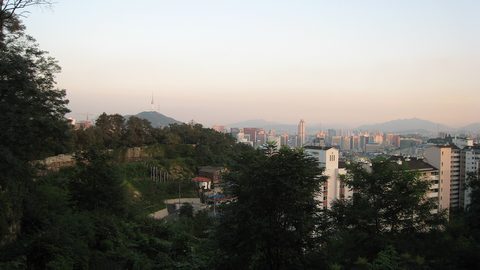
 South Korea Budget Stays Guesthouses Jjimjilbang Goshiwon and Love Motels Explained
A no-surprises guide to South Korea's cheapest beds, from sleeping on a jjimjilbang mat in Seoul to renting a tiny goshiwon room or a love motel by the night.
South Korea Budget Stays Guesthouses Jjimjilbang Goshiwon and Love Motels Explained
A no-surprises guide to South Korea's cheapest beds, from sleeping on a jjimjilbang mat in Seoul to renting a tiny goshiwon room or a love motel by the night.
-
 Best Time to Visit South Korea and the Two Peak Seasons That Double Your Costs
South Korea's two lunar calendar holidays, Seollal and Chuseok, can double your travel costs. Here is when to go instead for decent weather and budget-friendly prices.
Best Time to Visit South Korea and the Two Peak Seasons That Double Your Costs
South Korea's two lunar calendar holidays, Seollal and Chuseok, can double your travel costs. Here is when to go instead for decent weather and budget-friendly prices.
-
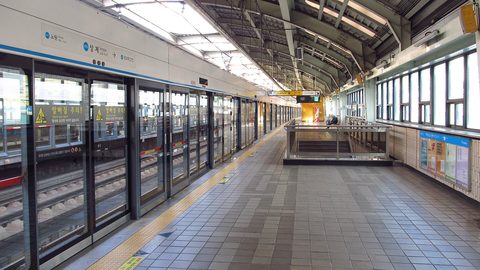 Getting Around South Korea With T-Money Cards KTX Trains and Intercity Buses
From tapping a T-money card on a Seoul city bus to navigating the Express Bus Terminal for a KTX ride, here is how South Korea's transport actually works.
Getting Around South Korea With T-Money Cards KTX Trains and Intercity Buses
From tapping a T-money card on a Seoul city bus to navigating the Express Bus Terminal for a KTX ride, here is how South Korea's transport actually works.
-
 South Korea Entry Rules K-ETA Tourist Visas and What Southeast Asian Passports Need
A practical guide to South Korea's K-ETA system and tourist visa rules, with specific requirements for Philippine, Indonesian, Vietnamese, and other Southeast Asian passports.
South Korea Entry Rules K-ETA Tourist Visas and What Southeast Asian Passports Need
A practical guide to South Korea's K-ETA system and tourist visa rules, with specific requirements for Philippine, Indonesian, Vietnamese, and other Southeast Asian passports.
-
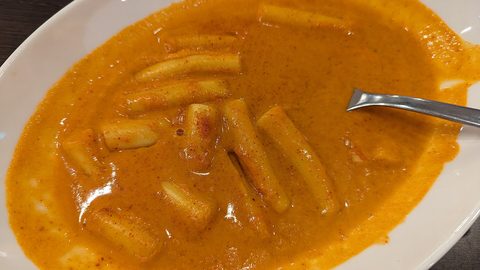 Eating Cheaply in South Korea Halal Food in Seoul and Budget Street Food Finds
Where to eat on a tight budget in South Korea, plus a dedicated guide to finding halal Korean food, from Itaewon barbecue to Myeongdong street stalls.
Eating Cheaply in South Korea Halal Food in Seoul and Budget Street Food Finds
Where to eat on a tight budget in South Korea, plus a dedicated guide to finding halal Korean food, from Itaewon barbecue to Myeongdong street stalls.
-
 One Week in South Korea A Line by Line Cost Breakdown for Budget Travelers
A detailed line-by-line account of every won spent during one week in South Korea, from T-money card top-ups to jjigae in a Namdaemun alley.
One Week in South Korea A Line by Line Cost Breakdown for Budget Travelers
A detailed line-by-line account of every won spent during one week in South Korea, from T-money card top-ups to jjigae in a Namdaemun alley.
-
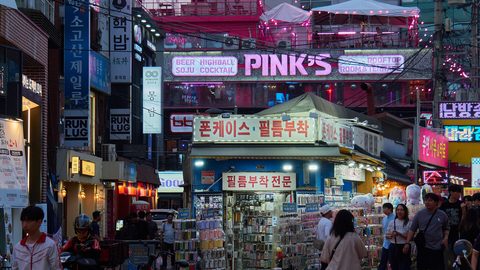 Seoul
Seoul does not have to be expensive. A district-by-district guide to free attractions, cheap street eats near subway exits, and the palace days that cost nothing.
Seoul
Seoul does not have to be expensive. A district-by-district guide to free attractions, cheap street eats near subway exits, and the palace days that cost nothing.
-
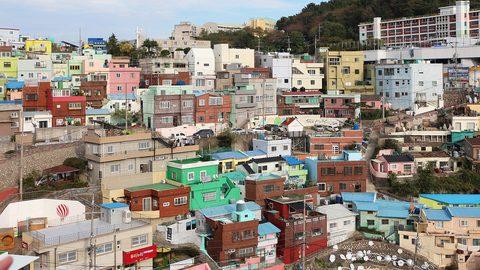 Busan
Take the night train from Seoul, wake up on Haeundae Beach, and do Busan on a budget. The cheap seafood markets, free viewpoints, and how to book that train.
Busan
Take the night train from Seoul, wake up on Haeundae Beach, and do Busan on a budget. The cheap seafood markets, free viewpoints, and how to book that train.
-
 Korea or Japan for a Cheap Trip The Honest Arithmetic Breakdown
A direct cost comparison of street food, transit passes, and budget beds to decide whether South Korea or Japan is cheaper for your next trip.
Korea or Japan for a Cheap Trip The Honest Arithmetic Breakdown
A direct cost comparison of street food, transit passes, and budget beds to decide whether South Korea or Japan is cheaper for your next trip.