Mailing Things Back from Seoul Without the Headache
Sending a box home from Seoul is straightforward once you know the right form and counter. Real post office prices, weight limits, and the kimchi shipping rules explained.


Seoul Post Office International Counter: One Counter, One Form, No Confusion
If you imagine a foreigner wrestling with Korean forms and a clerk who speaks no English, stop. That scenario happens, but you can skip it entirely. The process inside a Seoul post office is straightforward once you know which counter to walk to and which form number to ask for. Every step is predictable: where you stand, what you write, and exactly how much you pay to send a parcel from Seoul to Bangkok, Hanoi, Jakarta, Manila, Singapore, or Kuala Lumpur. All prices are the 2026 rates published by Korea Post in their annual international rate table.
Which Post Office and Which Counter
Go to the Jongno post office in central Seoul. It is the most foreigner-friendly branch in the city. The staff process international parcels daily and understand English well enough to get your forms right. Arrive by 10:00 on a weekday. By 11:30 the lunch queue blocks the counter.
The counter you want is labelled "EMS and International Parcels." If the line is long, ask the greeter near the ticket machine for the correct queue number. At 1:00 AM when the post office is closed, your only option is the 24-hour self-service kiosk near the main entrance. That kiosk handles domestic parcels only. For international shipping, you must come back during operating hours: 09:00 to 18:00 Monday through Friday, and 09:00 to 13:00 on Saturday.
The Box and the Address Slip
Do not bring your own box from home unless you are certain it meets Korea Post size limits. Buy a box at the post office. They sell six sizes, from 230 by 160 by 100 millimetres up to 520 by 400 by 340 millimetres, priced between 700 and 2,500 KRW. Tape costs 1,500 KRW per roll. Bubble wrap runs 2,000 to 4,000 KRW per sheet. You cannot use duct tape or packing tape you brought; the post office requires their own tape for inspection seals.
Filling Out the Customs Slip
Write the address on the Korean customs slip, not a separate label. The slip is form CN23 for parcels over 2 kilos or worth more than 300,000 KRW, and form CN22 for small packets up to 2 kilos and 300,000 KRW or less. Write the destination address in Roman letters. Korean addresses use the reverse order from Western ones: start with the country, then the city, then the district, then the street, then the building, then the recipient name. So you write "Bangkok, Thailand" first, not last. If you reverse it, the sorting machine in Seoul will still process it correctly because the machine reads the country code line. The final delivery in your home country may be delayed. Write in block capitals. Do not use cursive.
The Customs Declaration: What Gets Rejected and Why
Declare every item in the box: description, quantity, weight, and value in KRW per item. The most common rejection happens with food. Kimchi is prohibited. So is tteok (rice cake). Fish cakes, jerky, honey, and any ginseng product that contains alcohol are also banned. Meat, dairy, eggs, fresh fruit, vegetables, seeds, live plants, and soil are blocked. Lithium batteries not installed in a device, aerosols, flammable liquids, perfume over 150 millilitres, cash, and precious metals are blocked too.
One reader in every ten asks about sending kimchi. The answer is no. Not via Korea Post international mail. If you want to send fermented food, check a specialist courier like Hanjin or CJ Logistics. Expect to pay more than double the post office rate.
EMS, K-Packet, or Surface: Which One, Why, and What it Costs
You have three options. The right choice depends on how fast you need it and how much your box weighs.
EMS: Fast and Tracked, 2 to 5 Business Days
EMS is the express service. It reaches any capital in Southeast Asia in two to five business days. Maximum weight is 30 kilos, maximum length is 1.5 metres, and total length plus girth cannot exceed 3.0 metres. For a 0.5 kilo document to Bangkok, the 2026 rate is 18,000 KRW. For 1.0 kilo, 22,500 KRW. For 2.0 kilos, 28,000 KRW. Rates to Hanoi, Manila, Singapore, and Kuala Lumpur are identical: 17,500 KRW for 0.5 kilos, 21,500 KRW for 1.0 kilo, and 26,500 KRW for 2.0 kilos. Jakarta costs slightly more: 19,000 KRW at 0.5 kilos, 24,000 KRW at 1.0 kilo, and 30,500 KRW at 2.0 kilos. Use EMS when the contents are time-sensitive or valuable below about 5 kilos.
K-Packet: Slow Reliable, 7 to 14 Business Days
K-Packet is the budget tracked service. It arrives in 7 to 14 business days. Maximum weight is 20 kilos, maximum length is 1.05 metres, and length plus girth cannot exceed 2.0 metres. A 0.5 kilo parcel to Bangkok costs 12,000 KRW. At 1.0 kilo, 15,500 KRW. At 2.0 kilos, 20,000 KRW. Rates to Hanoi, Manila, Singapore, and Kuala Lumpur are 11,500 KRW for 0.5 kilos, 14,500 KRW for 1.0 kilo, and 18,500 KRW for 2.0 kilos. Jakarta again is higher: 12,500 KRW, 16,000 KRW, and 21,000 KRW at those weight bands. K-Packet is the right choice for non-urgent gifts and clothes.
Surface Mail: Cheapest but Count on 1 to 3 Months
Surface mail travels by sea. Delivery time to Southeast Asia is one to three months. Maximum weight is 20 kilos, and the size limits match K-Packet. A 5 kilo box to Bangkok costs 28,000 KRW. At 10 kilos, 38,000 KRW. At 20 kilos, 55,000 KRW. To Hanoi, Manila, Singapore, or Kuala Lumpur, the 5 kilo rate is 26,000 KRW, 10 kilos is 35,000 KRW, and 20 kilos is 50,000 KRW. Jakarta: 30,000 KRW for 5 kilos, 42,000 KRW for 10 kilos, and 62,000 KRW for 20 kilos. Surface mail is a good choice only if you are shipping bulky items you will not need for months and you do not care about tracking. There is no tracking for surface parcels.


Ship it or Take it on the Plane? Compare the Numbers
Korean Air and Asiana both charge between 100,000 and 150,000 KRW for an extra checked piece to Southeast Asia, up to 23 kilos. Surface mail at 20 kilos costs 55,000 KRW to Bangkok. That is roughly half the airline rate. So above about 15 kilos, surface mail is cheaper than an extra bag. EMS at 5 kilos to Bangkok would be roughly 50,000 KRW, well under the airline fee. Below about 5 kilos, EMS is cheaper than the excess baggage fee. Between 5 and 15 kilos, compare EMS with surface. EMS costs more but arrives in days, not months.
The failure case: if your flight leaves tomorrow and the post office is closed, pay the airline fee. Do not try to ship from a 24-hour convenience store. They do not accept international parcels.
Read next
-
 South Korea Budget Stays Guesthouses Jjimjilbang Goshiwon and Love Motels Explained
A no-surprises guide to South Korea's cheapest beds, from sleeping on a jjimjilbang mat in Seoul to renting a tiny goshiwon room or a love motel by the night.
South Korea Budget Stays Guesthouses Jjimjilbang Goshiwon and Love Motels Explained
A no-surprises guide to South Korea's cheapest beds, from sleeping on a jjimjilbang mat in Seoul to renting a tiny goshiwon room or a love motel by the night.
-
 Best Time to Visit South Korea and the Two Peak Seasons That Double Your Costs
South Korea's two lunar calendar holidays, Seollal and Chuseok, can double your travel costs. Here is when to go instead for decent weather and budget-friendly prices.
Best Time to Visit South Korea and the Two Peak Seasons That Double Your Costs
South Korea's two lunar calendar holidays, Seollal and Chuseok, can double your travel costs. Here is when to go instead for decent weather and budget-friendly prices.
-
 Getting Around South Korea With T-Money Cards KTX Trains and Intercity Buses
From tapping a T-money card on a Seoul city bus to navigating the Express Bus Terminal for a KTX ride, here is how South Korea's transport actually works.
Getting Around South Korea With T-Money Cards KTX Trains and Intercity Buses
From tapping a T-money card on a Seoul city bus to navigating the Express Bus Terminal for a KTX ride, here is how South Korea's transport actually works.
-
 South Korea Entry Rules K-ETA Tourist Visas and What Southeast Asian Passports Need
A practical guide to South Korea's K-ETA system and tourist visa rules, with specific requirements for Philippine, Indonesian, Vietnamese, and other Southeast Asian passports.
South Korea Entry Rules K-ETA Tourist Visas and What Southeast Asian Passports Need
A practical guide to South Korea's K-ETA system and tourist visa rules, with specific requirements for Philippine, Indonesian, Vietnamese, and other Southeast Asian passports.
-
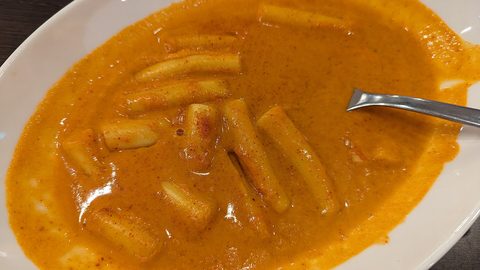 Eating Cheaply in South Korea Halal Food in Seoul and Budget Street Food Finds
Where to eat on a tight budget in South Korea, plus a dedicated guide to finding halal Korean food, from Itaewon barbecue to Myeongdong street stalls.
Eating Cheaply in South Korea Halal Food in Seoul and Budget Street Food Finds
Where to eat on a tight budget in South Korea, plus a dedicated guide to finding halal Korean food, from Itaewon barbecue to Myeongdong street stalls.
-
 One Week in South Korea A Line by Line Cost Breakdown for Budget Travelers
A detailed line-by-line account of every won spent during one week in South Korea, from T-money card top-ups to jjigae in a Namdaemun alley.
One Week in South Korea A Line by Line Cost Breakdown for Budget Travelers
A detailed line-by-line account of every won spent during one week in South Korea, from T-money card top-ups to jjigae in a Namdaemun alley.
-
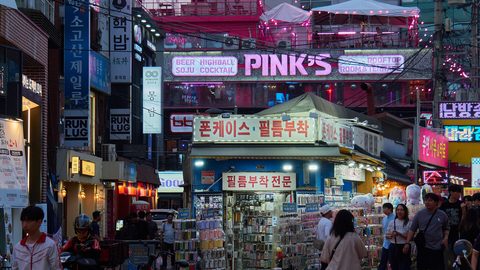 Seoul
Seoul does not have to be expensive. A district-by-district guide to free attractions, cheap street eats near subway exits, and the palace days that cost nothing.
Seoul
Seoul does not have to be expensive. A district-by-district guide to free attractions, cheap street eats near subway exits, and the palace days that cost nothing.
-
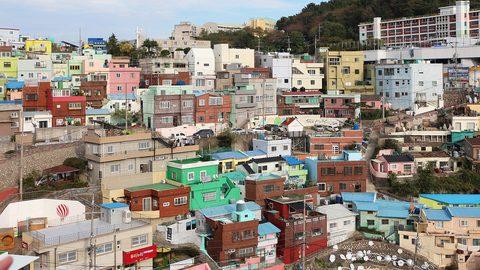 Busan
Take the night train from Seoul, wake up on Haeundae Beach, and do Busan on a budget. The cheap seafood markets, free viewpoints, and how to book that train.
Busan
Take the night train from Seoul, wake up on Haeundae Beach, and do Busan on a budget. The cheap seafood markets, free viewpoints, and how to book that train.
-
 Korea or Japan for a Cheap Trip The Honest Arithmetic Breakdown
A direct cost comparison of street food, transit passes, and budget beds to decide whether South Korea or Japan is cheaper for your next trip.
Korea or Japan for a Cheap Trip The Honest Arithmetic Breakdown
A direct cost comparison of street food, transit passes, and budget beds to decide whether South Korea or Japan is cheaper for your next trip.