Where to Find Affordable Korean Food and Halal Meals in Seoul
Where to eat on a tight budget in South Korea, plus a dedicated guide to finding halal Korean food, from Itaewon barbecue to Myeongdong street stalls.
Seoul’s Two-Track Strategy for Cheap Halal Eats
You need cheap, filling food in Seoul and you need it halal. Two separate problems. Two separate solutions. Seoul gives you both tracks. The first track covers the convenience store meal and the street stall that works for anyone. The second track covers the KMF-certified spots in Itaewon and the Muslim-friendly options in Myeongdong. Budget about 15,000 won per day for eating on the cheap track. Budget 30,000 won per day for the halal track. Both tracks keep you full without wrecking your trip budget.
The Ultra Budget Track: Convenience Stores, Chains, and Street Stalls
Convenience Store Meals
This is the cheapest way to eat in South Korea. It works for every traveller, including Muslims who check ingredients themselves. No dine-in meal beats a convenience store price. A samgak kimbap at CU or GS25 costs 1,200 to 1,800 won. That is a breakfast or a second lunch. Flat kimbap rolls run 1,500 won. A full dosirak packed lunch box costs 4,000 won and includes rice, protein, and pickled vegetables. Every store has a microwave. Walk in, heat it, eat. You get a complete meal for under 5,000 won in less than three minutes from door to table.
Kimbap Cheonguk and Gimbap Chains
These are the fast food of Korea and the cheapest sit-down meal at 2,000 won per roll. Kimbap Cheonguk is the largest chain. Order at the counter, pay, and food arrives in four to six minutes. A standard kimbap roll costs 2,500 won. Add a bowl of ramyeon and you have a meal for 7,000 won total. The banchan comes free and unlimited. Expect two small dishes per meal, sometimes four. Refill by asking or grabbing from the self-serve station. The failure case for these chains is Sunday evening when some locations close early. If it is 7pm and the kimbap shop is dark, walk to the nearest GS25 and buy a dosirak.
Pojangmacha Street Stalls and Tteokbokki
Street stalls called pojangmacha are the cheapest hot food at night. Tteokbokki costs 2,500 won per portion. You get a bowl of chewy rice cakes in a gochujang-based sauce with a skewer of fish cake. The problem for halal eaters is the stock. Standard street-stall tteokbokki uses anchovy stock. Some variants use pork bone stock. You cannot tell by looking. Ask in the simplest terms or skip street stalls entirely if you follow strict halal. Skip the sit-down tteokbokki spots too unless they have visible certification. A safer bet at a stall is odeng fish cake skewers at 1,000 won each, but the broth base is the same anchovy stock problem. If you are in a hurry and need food at 2am, the convenience store never closes.

The Halal Track: Itaewon, Myeongdong, and Near the Mosque
Seoul has a small number of KMF-approved establishments nationwide according to the 2024 Korea Muslim Federation count. That number is revised annually and published by KMF directly. Most of them sit in Itaewon. This is your primary district. The concentration runs along Usadan-ro and Itaewon-ro. You can walk from one approved spot to another in under 15 minutes. KMF approval means the slaughter method follows halal rules, ingredients are sourced from vetted suppliers, production facilities are inspected, and no alcohol appears in the final product. Any venue that says "Muslim-friendly" without KMF backing means no pork on the menu, but alcohol may be present and the slaughter method is not verified.
Itaewon: The Certified Cluster
Itaewon has KMF-approved Turkish kebab shops, Pakistani curry houses, and Korean halal dining rooms. A filling main dish costs 12,000 won. A mixed grill platter runs 20,000 won and feeds one person generously. Kimbap rolls from an approved shop in Itaewon cost 4,000 won, double the chain price but guaranteed halal. Arrive before noon for lunch or before 7pm for dinner. The popular spots fill by 12:30pm and 7:30pm. The failure case for Itaewon is Monday. Some approved venues close on Monday for rest. If the main strip has nothing open, walk fifteen minutes up to the Seoul Central Mosque area on Usadan-ro where smaller Pakistani groceries sell halal prepacked meals for 6,000 won.
Myeongdong and Hongdae: Limited Options
Myeongdong has a handful of KMF-approved or self-declared Muslim-friendly venues according to the 2024 count. These are Turkish or Middle Eastern spots tucked in side streets off the main shopping pedestrian area. A kebab plate costs 10,000 won. A bowl of lamb soup runs 11,000 won. The problem is that Muslim-friendly venues may serve alcohol. Ask before you order. In Hongdae the situation is the same with a few venues, and most of them are kebab shops rather than Korean food. If you want Korean cuisine that is halal, go to Itaewon. Do not expect KMF-approved Korean food in Myeongdong or Hongdae. The 2024 count is clear: a small cluster of approved establishments nationwide, and they concentrate in Itaewon.
What About Budget Halal in Convenience Stores?
Convenience stores sell no KMF-approved ready meals. The samgak kimbap and dosirak are not halal certified. The tuna kimbap is the safest bet because it avoids meat entirely, but the rice vinegar may contain mirin cooking wine. Check the ingredient label on the back. Look for the word "mirim" in the ingredients list. If you see it, skip that roll. Plain steamed sweet potatoes at 2,000 won are a safe fill. Hard-boiled eggs at 1,500 won for a pack of two are safe. Bananas and yoghurt drinks are safe. You can assemble a halal convenience store meal for 5,000 won, but it takes reading labels. Allow five minutes to check three products before buying.


The One Thing That Goes Wrong Most Often
Travellers assume "Muslim-friendly" means halal certified. It does not. A restaurant with no pork on the menu may cook with wine in the marinade or serve alcohol. Ask directly. Point at the menu, say "alcohol?" Wait for a clear no before you order. If you eat at a place that is Muslim-friendly but not KMF approved, the bulgogi marinade likely contains cooking wine. Jjajangmyeon from a non-approved shop may use pork fat in the black bean sauce. Tteokbokki from a street stall may use pork bone stock. The only way to be certain is to eat at one of the KMF-approved establishments. The single most practical step you can take right now: pull up the Korea Muslim Federation website, find their 2024 list of approved venues, and save the Itaewon addresses to your phone before you leave home.
Common Questions
Can I eat kimchi if I follow halal?
Standard kimchi contains salted shrimp and fish sauce. Some recipes add pork fat or pork stock. Most restaurant kimchi is not halal safe. Skip it unless the restaurant specifies halal kimchi. No KMF-approved restaurant has confirmed halal kimchi as standard.
How do I know if a restaurant is really halal certified?
Look for the Korea Muslim Federation logo on the door or menu. The 2024 count was a small number of approved establishments nationwide. Any claim of "Muslim-friendly" without the logo means no pork on the menu, but alcohol may be present and the slaughter method is not verified.
What is the cheapest halal meal in Seoul?
A prepacked meal from a halal grocery near the Seoul Central Mosque costs 6,000 won. A kebab plate in Itaewon costs 10,000 won. The cheapest sit-down approved meal is around 12,000 won for a curry plate.
What do I eat if it is 11pm and the halal restaurants are closed?
Only convenience stores are open past midnight. Buy steamed sweet potatoes and hard-boiled eggs. Skip pre-packed kimbap unless you verify no mirim in the ingredients. No convenience store food in Seoul is KMF approved.
Read next
-
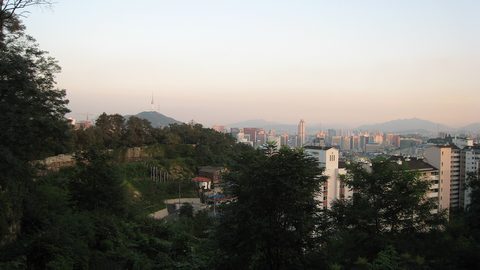
 South Korea Budget Stays Guesthouses Jjimjilbang Goshiwon and Love Motels Explained
A no-surprises guide to South Korea's cheapest beds, from sleeping on a jjimjilbang mat in Seoul to renting a tiny goshiwon room or a love motel by the night.
South Korea Budget Stays Guesthouses Jjimjilbang Goshiwon and Love Motels Explained
A no-surprises guide to South Korea's cheapest beds, from sleeping on a jjimjilbang mat in Seoul to renting a tiny goshiwon room or a love motel by the night.
-
 Best Time to Visit South Korea and the Two Peak Seasons That Double Your Costs
South Korea's two lunar calendar holidays, Seollal and Chuseok, can double your travel costs. Here is when to go instead for decent weather and budget-friendly prices.
Best Time to Visit South Korea and the Two Peak Seasons That Double Your Costs
South Korea's two lunar calendar holidays, Seollal and Chuseok, can double your travel costs. Here is when to go instead for decent weather and budget-friendly prices.
-
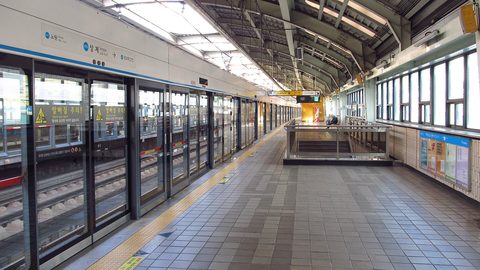 Getting Around South Korea With T-Money Cards KTX Trains and Intercity Buses
From tapping a T-money card on a Seoul city bus to navigating the Express Bus Terminal for a KTX ride, here is how South Korea's transport actually works.
Getting Around South Korea With T-Money Cards KTX Trains and Intercity Buses
From tapping a T-money card on a Seoul city bus to navigating the Express Bus Terminal for a KTX ride, here is how South Korea's transport actually works.
-
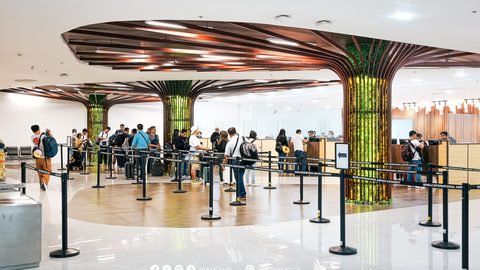 South Korea Entry Rules K-ETA Tourist Visas and What Southeast Asian Passports Need
A practical guide to South Korea's K-ETA system and tourist visa rules, with specific requirements for Philippine, Indonesian, Vietnamese, and other Southeast Asian passports.
South Korea Entry Rules K-ETA Tourist Visas and What Southeast Asian Passports Need
A practical guide to South Korea's K-ETA system and tourist visa rules, with specific requirements for Philippine, Indonesian, Vietnamese, and other Southeast Asian passports.
-
 One Week in South Korea A Line by Line Cost Breakdown for Budget Travelers
A detailed line-by-line account of every won spent during one week in South Korea, from T-money card top-ups to jjigae in a Namdaemun alley.
One Week in South Korea A Line by Line Cost Breakdown for Budget Travelers
A detailed line-by-line account of every won spent during one week in South Korea, from T-money card top-ups to jjigae in a Namdaemun alley.
-
 Seoul Shopping for Fabric and Markets Dongdaemun and Namdaemun on a Budget
Seoul's Dongdaemun and Namdaemun markets are where locals buy fabric by the roll. Learn the wholesale hours, the negotiation rules, and which floors matter.
Seoul Shopping for Fabric and Markets Dongdaemun and Namdaemun on a Budget
Seoul's Dongdaemun and Namdaemun markets are where locals buy fabric by the roll. Learn the wholesale hours, the negotiation rules, and which floors matter.
-
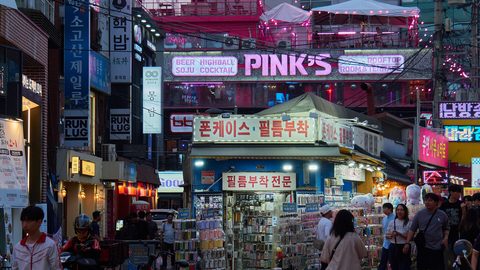 Seoul
Seoul does not have to be expensive. A district-by-district guide to free attractions, cheap street eats near subway exits, and the palace days that cost nothing.
Seoul
Seoul does not have to be expensive. A district-by-district guide to free attractions, cheap street eats near subway exits, and the palace days that cost nothing.
-
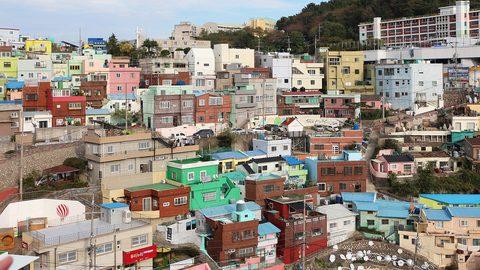 Busan
Take the night train from Seoul, wake up on Haeundae Beach, and do Busan on a budget. The cheap seafood markets, free viewpoints, and how to book that train.
Busan
Take the night train from Seoul, wake up on Haeundae Beach, and do Busan on a budget. The cheap seafood markets, free viewpoints, and how to book that train.
-
 Korea or Japan for a Cheap Trip The Honest Arithmetic Breakdown
A direct cost comparison of street food, transit passes, and budget beds to decide whether South Korea or Japan is cheaper for your next trip.
Korea or Japan for a Cheap Trip The Honest Arithmetic Breakdown
A direct cost comparison of street food, transit passes, and budget beds to decide whether South Korea or Japan is cheaper for your next trip.