Korea Rail Pass or Separate Tickets for a One Week Trip
A practical guide to Korea Rail Pass or Separate Tickets for a One Week Trip.
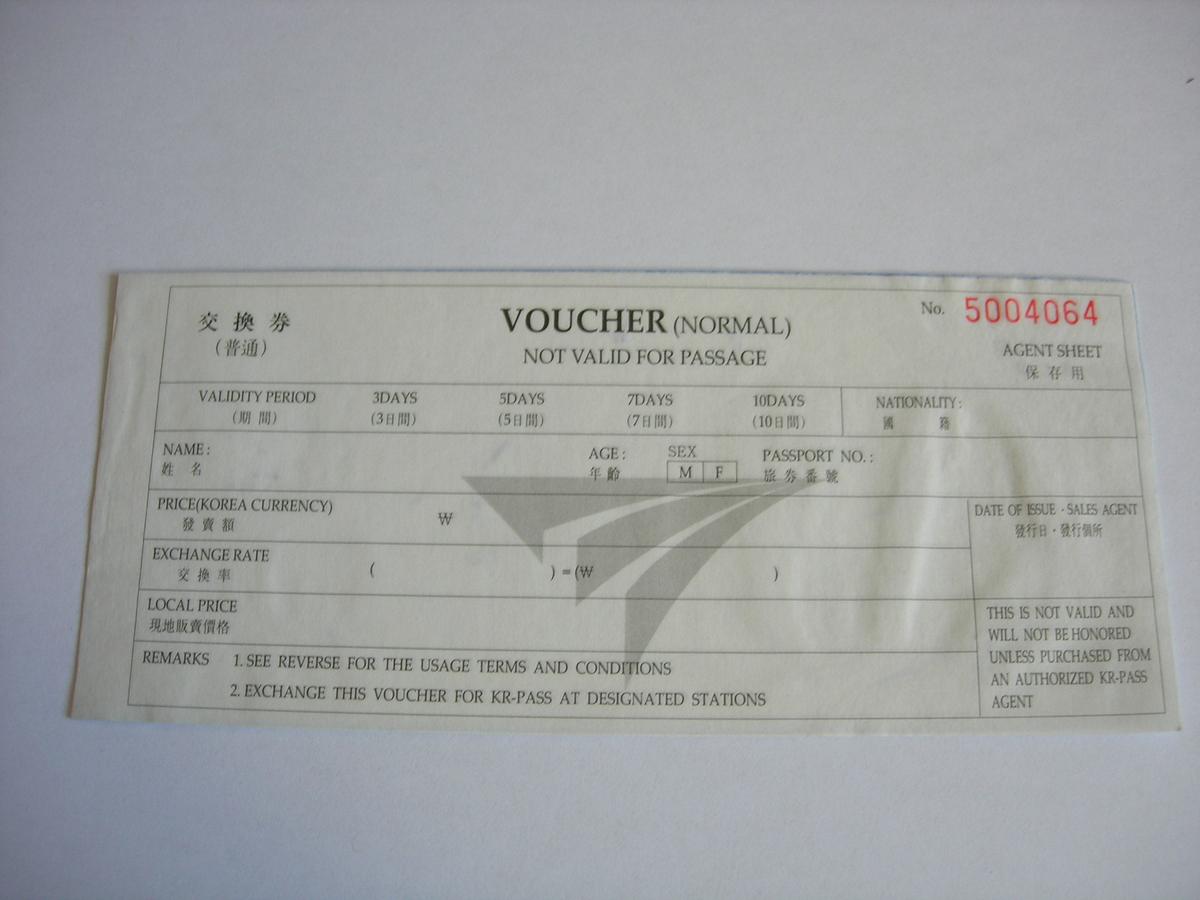

Who can use the KORAIL PASS
The KORAIL PASS is a rail product reserved exclusively for visitors holding a non-Korean passport. Korean nationals cannot purchase or use it, regardless of where they live. This restriction is absolute and is enforced at the point of sale and during onboard ticket checks. If you are travelling with a Korean friend or relative, they will need to buy standard tickets even if you hold a pass. The pass is designed to give international tourists a flexible way to explore the country by rail, and the eligibility rule is the first filter you should apply before comparing costs.
Age categories matter for pricing. The official bands are Adult (age 28 and above), Youth (age 13 to 27), and Child (age 6 to 12). Children under 6 ride free on KTX services when accompanied by a fare-paying adult, so they do not need a pass. A Saver Pass discount is available for groups of 2 to 5 passengers travelling together with the same itinerary, which reduces the per-person cost slightly. If you are a solo traveller, a couple, or a family with young children, the arithmetic changes, and the pass may or may not be the cheaper option.
How the pass types actually work
KORAIL offers two structural pass designs: consecutive and select. The 3-day and 5-day passes are consecutive. Once you start, the pass is valid for three or five calendar days in a row. There is no pause button. If you activate a 3-day consecutive pass on a Monday morning, it expires on Wednesday night, whether you board a train or not. This design suits itineraries where you move cities on back-to-back days, such as a quick loop from Seoul to Gyeongju and Busan.
The 2-day and 4-day passes are select passes. You pick your travel days within a 10-day window that begins on the first date you set. The days do not need to be consecutive. You could travel on a Tuesday, stay put for three days, and use your second day on Saturday. This flexibility is the main selling point for travellers who want to base themselves in one city for a few days between long rail journeys. The trade-off is that the per-day cost of a select pass is higher than a consecutive pass of similar length, so you pay for the convenience.
The Seoul to Busan reality check
The most common benchmark for value is the Seoul to Busan KTX route. A standard-class adult one-way fare on this route was reduced as part of a wider fare restructuring when Korail integrated SRT operations. A round trip at the standard adult fare costs less than the cheapest 2-day select KORAIL PASS. The pass is not cost-effective for a traveller whose only long-distance rail journey is a single Seoul to Busan return trip. You would pay more for the pass than you would for two individual tickets.
This calculation shifts when you add more legs. If your week includes Seoul to Busan, Busan to Gyeongju, and Gyeongju back to Seoul, the pass can pull ahead. The break-even point depends on the exact fares on your travel dates, which are variable. The editorial recommendation is to sketch your planned route, look up the current standard-class fares for each leg on the Korail booking system, and compare the sum against the pass price for your age group. Do not rely on a single benchmark route if your itinerary has three or more KTX journeys.
What the pass does not cover
The KORAIL PASS is not a universal transport key. It does not cover SRT trains, metropolitan subway lines, the DMZ train, or temporary tourist trains. If you plan to use the Seoul Metro to get to Seoul Station, you need a separate T-money card or single-journey ticket. The pass also does not cover airport railroad express trains. This is a mainline rail pass, and its coverage stops at the KORAIL network gates.
A significant post-merger uncertainty exists around former SRT trains that now carry KTX-Sancheon branding and depart from Suseo Station in southern Seoul. Official guidance has not yet confirmed whether these services are included in the KORAIL PASS. If your accommodation is in Gangnam or you prefer Suseo as a departure point, you must contact Korail customer service directly to verify coverage before buying a pass. Do not assume the pass works at Suseo simply because the train is now called KTX.
Seat reservations and the standee rule
Buying a KORAIL PASS does not guarantee you a seat. After purchase, you must register each travel date and reserve seats through the My Reservation system on the Korail website. Pass holders can make up to two free seat reservations per travel day. Once both reservations are used, you may still board trains on that day and travel as a standee without extra charge. This is a useful safety valve on busy routes, but it means you could spend a journey standing in the vestibule if you do not plan ahead.
For a one-week trip with several rail days, the two-reservation limit per day is usually sufficient, because most travellers make one or two long hops per day. On a day when you are only taking a single KTX from Busan to Seoul, you will use just one reservation. The limit bites when you try to chain multiple short segments, such as Seoul to Daejeon, Daejeon to Daegu, and Daegu to Busan all in one day. In that scenario, your third segment would be standee-only. Factor this into your itinerary design if you prefer a guaranteed seat.
Where and how to buy
The pass is sold on Korail's English website, at designated travel agencies, and at KORAIL travel centres in major stations including Seoul, Yongsan and Busan. You need a valid passport and a credit card. If you buy online, you will receive a pass confirmation that you then exchange for the physical pass or register in the app, depending on the current fulfilment method. The official purchase channel is the safest route; third-party resellers may add fees without adding value.
Prices and pass conditions are subject to change. The fare table, age categories and pass types described here reflect a specific point in time. Before you commit, open the KORAIL PASS page on the official Korail website and check the current pricing for your age group and intended pass type. The same applies to KTX single-ticket fares, which vary by departure and are published in the online fare table. A few minutes of verification can prevent an expensive assumption.
A practical decision framework for a one-week trip
Start by listing every intercity rail journey you plan to take in your seven days. Exclude airport transfers and metro rides, because the pass does not cover them. For each leg, note whether it is a KTX route or a slower service such as ITX-Saemaeul or Mugunghwa, because the pass covers those too but the savings are smaller on cheaper fares. Add up the current standard-class adult or youth fares for those legs using the official Korail fare table.
Next, decide whether your itinerary is consecutive or staggered. If you are moving cities on four days within a tight window, a consecutive pass may fit. If you have two long rail days separated by a multi-day stay in one city, a select pass is the better match. Compare the total ticket cost against the pass price for your age group. If the pass is cheaper or break-even, it is worth considering for the added flexibility of standee travel and the ability to change plans. If the pass is more expensive, buy separate tickets and reserve seats individually.
Finally, check the Suseo question if it affects your route. Call or email Korail customer service and ask explicitly whether your intended Suseo departure is covered. Get the answer in writing if you can. This one check can prevent a wasted pass purchase and a stressful moment at the platform gate.
Sources and verification
- letskorail.com — Research source checked for this guide
- english.visitkorea.or.kr — Research source checked for this guide
- info.korail.com — Research source checked for this guide
- korail.com — Research source checked for this guide
Read next
-
 South Korea Budget Stays Guesthouses Jjimjilbang Goshiwon and Love Motels Explained
A no-surprises guide to South Korea's cheapest beds, from sleeping on a jjimjilbang mat in Seoul to renting a tiny goshiwon room or a love motel by the night.
-
 Best Time to Visit South Korea and the Two Peak Seasons That Double Your Costs
South Korea's two lunar calendar holidays, Seollal and Chuseok, can double your travel costs. Here is when to go instead for decent weather and budget-friendly prices.
-
 Getting Around South Korea With T-Money Cards KTX Trains and Intercity Buses
From tapping a T-money card on a Seoul city bus to navigating the Express Bus Terminal for a KTX ride, here is how South Korea's transport actually works.
-
 South Korea Entry Rules K-ETA Tourist Visas and What Southeast Asian Passports Need
A practical guide to South Korea's K-ETA system and tourist visa rules, with specific requirements for Philippine, Indonesian, Vietnamese, and other Southeast Asian passports.
-
 Eating Cheaply in South Korea Halal Food in Seoul and Budget Street Food Finds
Where to eat on a tight budget in South Korea, plus a dedicated guide to finding halal Korean food, from Itaewon barbecue to Myeongdong street stalls.
-
 One Week in South Korea A Line by Line Cost Breakdown for Budget Travelers
A detailed line-by-line account of every won spent during one week in South Korea, from T-money card top-ups to jjigae in a Namdaemun alley.
-
 Seoul
Seoul does not have to be expensive. A district-by-district guide to free attractions, cheap street eats near subway exits, and the palace days that cost nothing.
-
 Busan
Take the night train from Seoul, wake up on Haeundae Beach, and do Busan on a budget. The cheap seafood markets, free viewpoints, and how to book that train.
-
 Korea or Japan for a Cheap Trip The Honest Arithmetic Breakdown
A direct cost comparison of street food, transit passes, and budget beds to decide whether South Korea or Japan is cheaper for your next trip.