Seoul or Busan Which Is Cheaper for a Five Day Trip
A practical guide to Seoul or Busan Which Is Cheaper for a Five Day Trip.
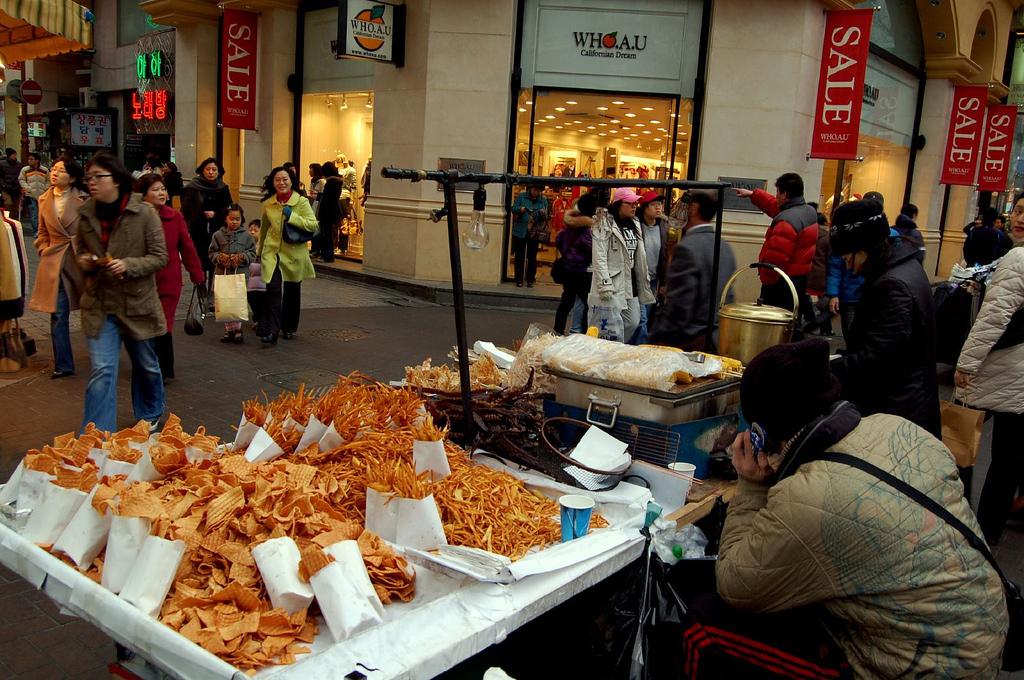

The Real Cost Gap Between Seoul and Busan
Five days in South Korea can feel like two different trips depending on which city you choose as your base. Seoul moves fast, stacks its attractions across sprawling districts, and prices its everyday essentials to match its capital status. Busan hugs the coast, compresses its highlights into walkable neighbourhoods, and tends to leave more won in your pocket at the end of each day. The question is not simply which city is cheaper. It is whether the savings in Busan are large enough to matter once you factor in the cost of getting there and the kind of experience you want.
The numbers from government price surveys and transport operators paint a clear picture. Busan wins on accommodation, often by a wide margin. It wins on food, though the gap shrinks for everyday meals. Seoul wins on arrival cost if you are flying into Incheon, but that advantage can disappear the moment you book a train ticket south. Understanding where the differences actually show up lets you make a choice based on your priorities rather than a vague sense that one city feels more expensive.
Getting There and the KTX Question
Most international visitors enter South Korea through Incheon Airport, which connects directly to Seoul. The AREX Express Train from Incheon Terminal 1 to Seoul Station costs 13,000 KRW per adult and takes 43 minutes. The All-Stop Train offers a cheaper alternative at 4,750 KRW with a transit card, adding roughly 16 minutes to the journey. Either way, reaching central Seoul from the airport is a predictable, single-seat ride.
Reaching Busan from Incheon adds a KTX journey. A standard-class one-way ticket from Seoul Station to Busan costs 54,400 KRW. A round-trip comes to 108,800 KRW. For a simple return journey, individual tickets work out cheaper than the two-day Korail Pass, which is priced at 131,000 KRW. That round-trip fare is a fixed cost that any Busan itinerary must absorb. If you are travelling solo, the train fare alone can erase much of the accommodation savings Busan offers. For two or more people, the per-person accommodation advantage in Busan compounds and the train fare becomes easier to justify.
KTX fares are subject to review after a three-year minimum obligation period following the September 2026 KTX-SRT integration. Any future change requires consultation between agencies and acceptance by the Ministry of Land, Infrastructure and Transport under the Railroad Business Act. Before booking, confirm current fares directly with Korail.
Where You Sleep Takes the Biggest Bite
Accommodation is the line item where Seoul and Busan diverge most sharply. An analysis of 867 hotels in Busan found an average nightly rate of 76,000 KRW. Within that average, the Seomyeon district sits around 58,000 KRW per night while the Haeundae beach district averages 94,000 KRW. Seoul's average daily rate for all accommodation sat in the 150,000 to 160,000 KRW range in early 2026. That is roughly double the Busan average.
Budget travellers face a narrower but still meaningful gap. A hostel dormitory bed in Seoul typically costs between 25,000 and 45,000 KRW per night. A budget guesthouse private room runs from 50,000 to 90,000 KRW. In Busan, a dormitory bed costs between 18,000 and 35,000 KRW, while a guesthouse private room ranges from 45,000 to 80,000 KRW. Over five nights, a solo traveller in private guesthouse rooms might save anywhere from 25,000 to 50,000 KRW in Busan. A couple or pair of friends booking mid-range hotels could save 370,000 KRW or more.
Accommodation prices in both cities fluctuate significantly by season. Peak rates arrive during cherry-blossom season in late March through early April, autumn foliage in late October through early November, and major holidays. Always check live prices on booking platforms before committing to dates. The Korea Tourism Organization website provides seasonal guidance but not real-time rates.
Eating Out Without the Guesswork
The Korea Consumer Agency publishes monthly dine-out price surveys that remove the guesswork from meal budgeting. In September 2026, the average price of a roll of gimbap was 3,923 KRW in Seoul and 3,571 KRW in Busan. That 352 KRW difference is negligible over a short trip. A kimchi-jjigae set meal, which includes stew, rice and side dishes, averaged 8,846 KRW in Seoul and 8,429 KRW in Busan. Again, the gap is modest.
The divergence becomes visible with dishes that require more preparation. Bibimbap averaged 12,000 KRW in Seoul and 9,686 KRW in Busan. That 2,314 KRW difference per serving adds up if you eat bibimbap or similarly priced meals several times over five days. A traveller who eats two restaurant meals a day, mixing casual and mid-range options, might spend 10,000 to 20,000 KRW less in Busan over the full trip. The savings are real but not dramatic enough to anchor a budget decision on their own.
Both cities offer cheaper street food and convenience-store alternatives that fall below these surveyed averages. The government figures reflect sit-down restaurant pricing and serve best as a benchmark for comparing the two destinations rather than a strict daily spending prediction.
Getting Around Each City
Seoul's subway adult base fare with a T-money transit card is 1,550 KRW for journeys up to 10 kilometres. Busan Metro charges 1,600 KRW for Section 1, which also covers trips up to 10 kilometres, and 1,800 KRW for Section 2 beyond that distance. The difference per ride is minimal. Over five days of typical sightseeing with two to four rides daily, the total transit cost gap between the two cities is unlikely to exceed 2,000 KRW per person.
Where the experience diverges is not in fare cost but in how far you need to travel. Seoul's attractions spread from the historic palaces of Jongno to the shopping districts of Myeongdong and Gangnam, often requiring longer rides and more transfers. Busan's key sights cluster more tightly along the coastal strip connecting Haeundae, Gwangalli and Nampo-dong. You may ride less often in Busan simply because more is within walking distance. That is an editorial observation based on geography rather than a measured cost saving.
Seoul subway and Busan Metro fares are set by their respective operators and can be revised. Confirm current fares before travel through Seoul Metro and the Busan Transportation Corporation.
Running the Numbers for Different Travellers
A solo budget traveller staying in hostel dorms and eating casual meals will find the two cities surprisingly close. The KTX round-trip to Busan costs 108,800 KRW. Dorm bed savings in Busan might total 35,000 to 50,000 KRW over five nights. Food savings add perhaps 10,000 to 15,000 KRW. The train fare outweighs the combined accommodation and food advantage, making Seoul the cheaper option for a single budget traveller who does not mind dormitory living.
A couple sharing a mid-range private room sees a different equation. Five nights at Busan's average hotel rate of 76,000 KRW totals 380,000 KRW. Five nights at Seoul's lower-end average of 150,000 KRW totals 750,000 KRW. The 370,000 KRW accommodation saving more than covers two round-trip KTX tickets at 217,600 KRW combined. Add modest food savings and Busan emerges as the clear financial winner for pairs.
A group of three or four splitting apartment-style accommodation or multiple hotel rooms widens the Busan advantage further. The accommodation cost per person drops while the KTX fare remains fixed. For groups, Busan is almost certainly the cheaper five-day trip once accommodation enters the calculation.
How to Decide Without Overthinking
If you are travelling alone and willing to stay in hostels, Seoul keeps more money in your pocket by eliminating the KTX fare. The city's subway network puts every neighbourhood within reach, and the food cost difference is too small to sway the outcome. Choose Seoul and spend the saved train fare on an extra meal or attraction.
If you are travelling as a couple or group and want private rooms, Busan's accommodation savings will almost certainly outweigh the cost of getting there. Pick a hotel in Seomyeon rather than Haeundae to maximise the advantage. The coastal scenery and more compact layout are bonuses rather than budget factors, but they improve the value you get for your won.
If your dates fall during cherry-blossom season or autumn foliage, the price gap may shift. Both cities see rate spikes, but Seoul's higher baseline means its absolute price increase is often larger. Check live accommodation prices before locking in your plans. The AREX Express Train fare and KTX fare should be verified on the day of travel through the respective operator websites. No budget calculation is complete without confirming the numbers that apply to your specific dates.
Sources and verification
- khan.co.kr — Research source checked for this guide
- haniseoul.com — Research source checked for this guide
- english.seoul.go.kr — Research source checked for this guide
- humetro.busan.kr — Research source checked for this guide
- airportrailroad.com — Research source checked for this guide
- price.go.kr — Research source checked for this guide
Read next
-
 South Korea Budget Stays Guesthouses Jjimjilbang Goshiwon and Love Motels Explained
A no-surprises guide to South Korea's cheapest beds, from sleeping on a jjimjilbang mat in Seoul to renting a tiny goshiwon room or a love motel by the night.
-
 Best Time to Visit South Korea and the Two Peak Seasons That Double Your Costs
South Korea's two lunar calendar holidays, Seollal and Chuseok, can double your travel costs. Here is when to go instead for decent weather and budget-friendly prices.
-
 Getting Around South Korea With T-Money Cards KTX Trains and Intercity Buses
From tapping a T-money card on a Seoul city bus to navigating the Express Bus Terminal for a KTX ride, here is how South Korea's transport actually works.
-
 South Korea Entry Rules K-ETA Tourist Visas and What Southeast Asian Passports Need
A practical guide to South Korea's K-ETA system and tourist visa rules, with specific requirements for Philippine, Indonesian, Vietnamese, and other Southeast Asian passports.
-
 Eating Cheaply in South Korea Halal Food in Seoul and Budget Street Food Finds
Where to eat on a tight budget in South Korea, plus a dedicated guide to finding halal Korean food, from Itaewon barbecue to Myeongdong street stalls.
-
 One Week in South Korea A Line by Line Cost Breakdown for Budget Travelers
A detailed line-by-line account of every won spent during one week in South Korea, from T-money card top-ups to jjigae in a Namdaemun alley.
-
 Seoul
Seoul does not have to be expensive. A district-by-district guide to free attractions, cheap street eats near subway exits, and the palace days that cost nothing.
-
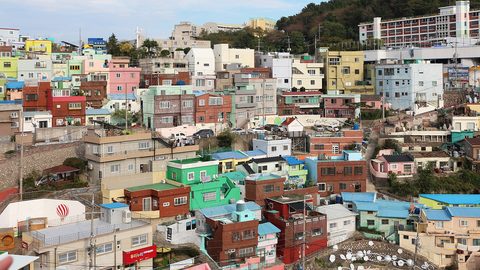 Busan
Take the night train from Seoul, wake up on Haeundae Beach, and do Busan on a budget. The cheap seafood markets, free viewpoints, and how to book that train.
-
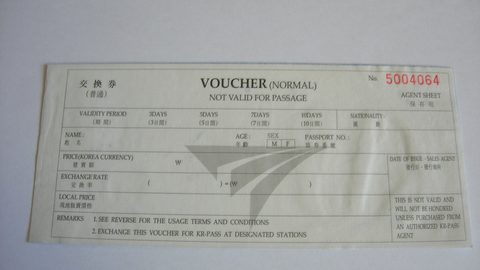 Korea Rail Pass or Separate Tickets for a One Week Trip
A practical guide to Korea Rail Pass or Separate Tickets for a One Week Trip.